Centre for close combat & self-defense in Villach
Friday:5:15 PM CFC Kids (ages 7–13)6:15 PM beginners & advanced (ages 14–99)
CFCCFC Villach

HEMA / European Martial Arts

Sword Fighting & Historical Fencing in Villach – HEMA

5,0 ★ Google · Villach

HEMA stands for Historical European Martial Arts – the historical martial arts of Europe. At CFC, HEMA is a training area at CFC Die Kampfkunstschule and complements our Asian systems with the European tradition: German longsword, rapier and historical fencing. We train the principles – distance, timing, structure – not the modern sporting tournament. A pragmatic, serious approach that also builds posture, discipline and mental strength.

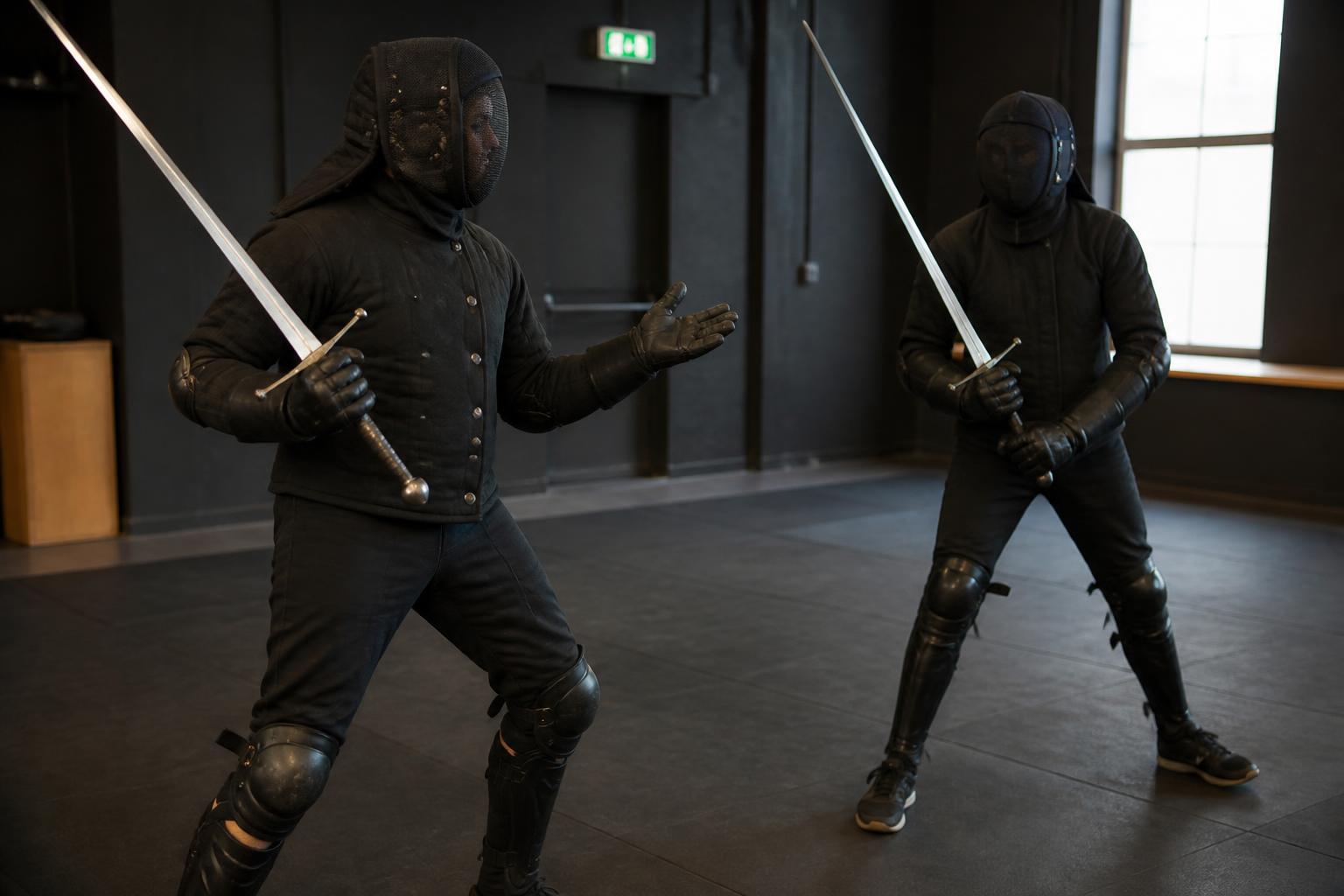
HEMA – European martial arts and swordsmanship training in Villach at CFC

CFC at a glance

Location
Villach, Carinthia
Head instructor
Headcoach Erich Ferlesch (Sifu 師傅)
Experience
martial arts experience since 1990
Field practice
decades of experience in operational security
Training path
structured training path
Suitable for
beginners and advanced students

CFC offers HEMA training in Villach as part of the training at CFC. The program is led by Headcoach Erich Ferlesch with martial arts experience since 1990. Training in Villach, Carinthia is sober and structured – no prior experience required.

How HEMA fits at CFC

HEMA – Historical European Martial Arts is one of the three core styles at CFC Die Kampfkunstschule and adds the European perspective to weapon work. Long sword and fencing train distance, timing and decision-making at greater range. Together with FMA it completes the picture of weapon work, which in turn feeds the unarmed program.

  • German longsword, rapier and historical fencing
  • Principles over point systems – not a competitive sport
  • Complements Wing Chun and FMA with the European tradition
  • Builds posture, focus and discipline
  • Personally taught by Headcoach Erich Ferlesch

Who is HEMA for?

  • Martial-arts enthusiasts drawn to European roots
  • Wing Chun and FMA students who want to broaden their understanding
  • Anyone who prefers classical principles over sport regulations

What is HEMA?

HEMA stands for Historical European Martial Arts. It is based on surviving fencing manuals and sources from the late medieval period onwards, from which swordsmanship and historical fencing systems are reconstructed. HEMA is therefore not a modern invention but a modern reconstruction: worked out from the sources, trained safely with protective gear and tested in partner work.

What HEMA develops

Longsword, rapier and sabre sharpen feel for distance, timing, precision and tactical thinking – at weapon range, where mistakes show up immediately. You learn the bind, before and after, angles and blade control. That makes HEMA a genuinely rewarding area in its own right, and in Villach you can pursue it specifically as historical fencing.

HEMA at CFC Die Kampfkunstschule: weapon combat

At CFC, HEMA belongs to the weapon-combat area. That area has two equal branches: FMA – Filipino stick and blade work – and HEMA – historical European fencing. They complement each other: FMA contributes rhythm, angle work and the transition to the empty hand; HEMA contributes distance work, structure and historical fencing method. We do not play one off against the other.

What HEMA at CFC is about

HEMA at CFC is not show fencing and not modern tournament sport. We work with the historical core principles of the longsword, rapier and fencing – distance, angle, timing, structure – and translate them so they sharpen your understanding of martial arts as a whole.

Sword fighting for beginners: what you gain

Historical fencing is an ideal entry point, even with no prior experience. Sword work trains coordination, footwork and reaction speed, improves posture and stamina, and sharpens focus along the way: at weapon range every decision counts. Add the cultural appeal of working from historical sources – and the enjoyment of partner training in a small, respectful group in Villach.

Training tools: what we use for sword fighting in Villach

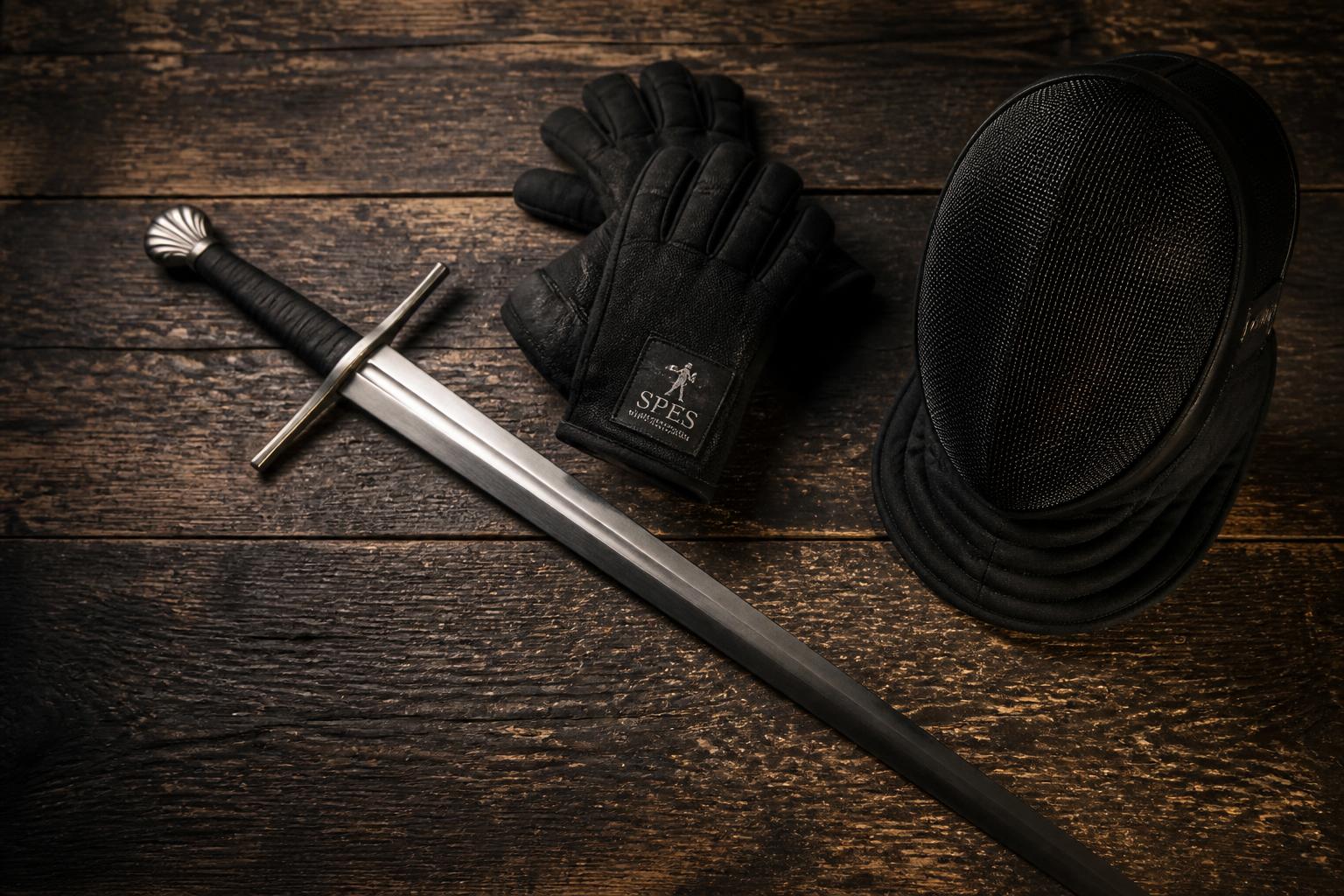
We start with wooden and synthetic wasters so posture, guards and cutting mechanics can be built cleanly without time pressure. Next comes the feder – the flexible practice sword of historical fencing – together with a fencing mask, padded gloves, gorget and elbow protection. For rapier and sabre work we use correspondingly lighter blades with matching balance. Practice gear is available on loan for beginners; students who stay build up their own equipment step by step.

Historical methods: the sources our fencing rests on

Our basis is the German tradition – Liechtenauer's verse with the glosses of Ringeck and the Codex Danzig, later Joachim Meyer – complemented by Italian sources for rapier work. From these we develop the four main guards, the master strikes, the bind and winding, and the timing of before, after and instantly (Vor, Nach, Indes). Every technique is first explained from the source, then drilled slowly and finally tested in free partner work. That keeps historical fencing in Villach traceable rather than arbitrary.

Curriculum: how HEMA training is structured

Training follows a clear progression: first stance, footwork and the four main guards, then the master strikes with clean cutting mechanics on the wooden waster. Building on that come the bind, winding and blade work on the feder, until techniques are finally applied in controlled free fencing with full protective gear. Each stage is signed off personally by Headcoach Erich Ferlesch – creating a traceable path from your first cut to confident free partner work.

Safe and structured

We train with appropriate practice gear, clear progression and in a calm, respectful setting. We start with the basics and build cleanly, so beginners can be introduced to the material safely.

Why train at CFC?

We provide structured training in close combat and self-defense in Villach. Training is under the direction of Headcoach Erich Ferlesch – martial arts experience since 1990 and decades of practical experience in close protection. The training path is clearly structured, groups stay small and every student is coached personally.

Frequently asked questions about HEMA

What is HEMA?

HEMA stands for Historical European Martial Arts. These fighting systems are reconstructed from historical fencing manuals and include longsword, messer and grappling at the sword. At CFC in Villach, HEMA belongs to our weapon-combat area.

Can I start historical fencing without any prior experience?

Yes. Training is built for beginners: we start with wooden wasters, basic guards and footwork in a small group, and practice gear is available on loan to get started. No background in martial arts or fencing is needed.

Do I need my own equipment?

At the beginning you can borrow equipment from us, but over the course of training every student has their own equipment.

Is HEMA at CFC a competitive sport?

No. We follow the historical principles, not modern tournament rules.

Can I train HEMA alongside Wing Chun or FMA?

Yes. That is exactly the idea – the systems complement each other in distance, timing and structure.

Which weapons do you train with for sword fighting in Villach?

We start with wooden and synthetic practice weapons and then move on to the feder, the flexible practice sword of historical fencing. Rapier and sabre follow, along with fencing mask, gloves and body protection. Entry-level gear is available on loan.

Which historical sources is your fencing based on?

Mainly the German fencing tradition after Liechtenauer with the glosses of Ringeck and the Codex Danzig, as well as Joachim Meyer; for rapier work we add Italian sources. Every technique is explained from the source first and then tested in partner training.

Related pages

Start your first HEMA training module in Villach

Experience historical fencing personally with Headcoach Erich Ferlesch: in your first longsword training module, practice gear is provided on loan. No prior experience needed – we guide you step by step through stance, guards and your first cuts.

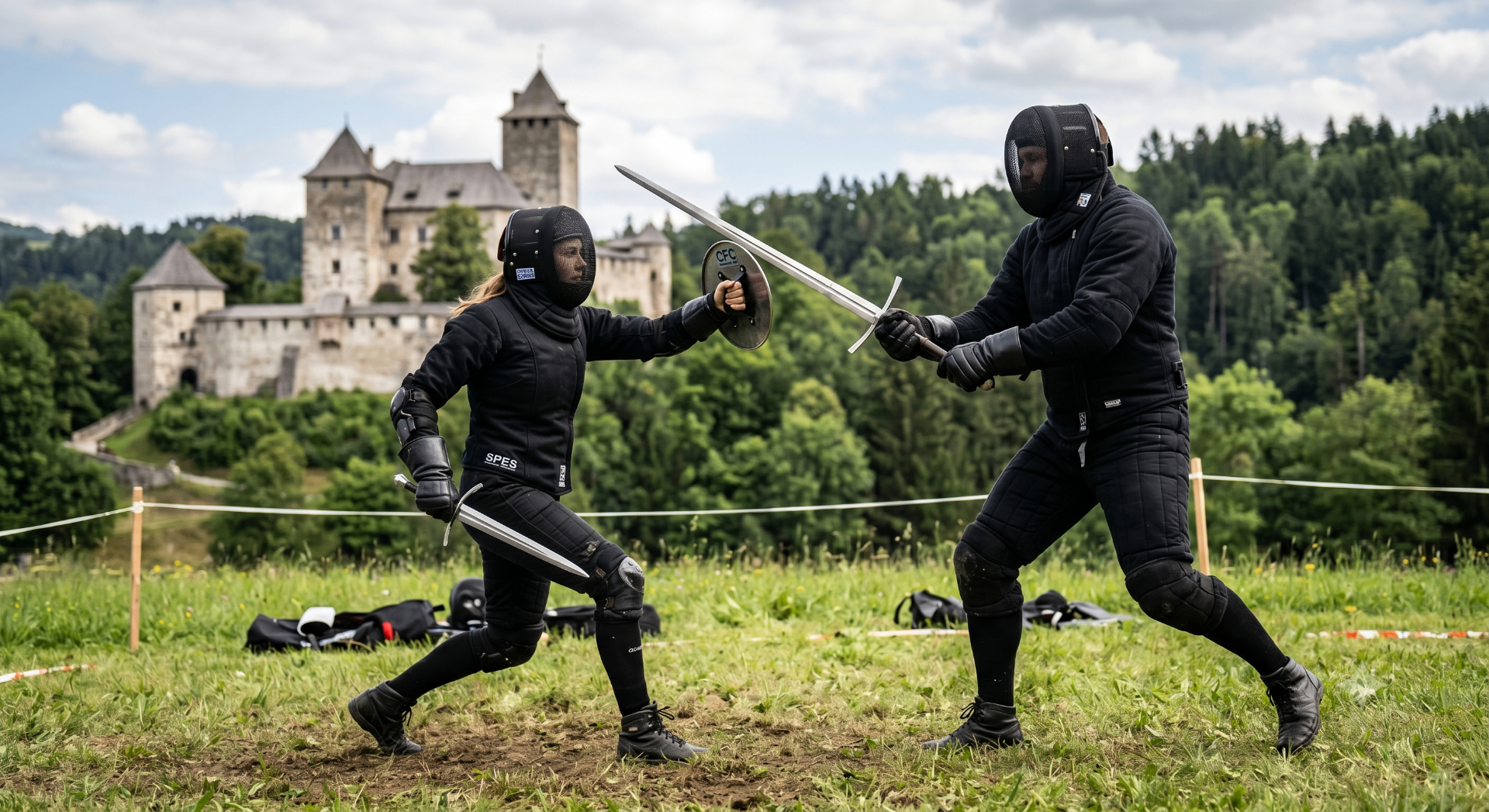
HEMA longsword duel with fencing masks in front of an Austrian castle in Carinthia

HEMA in pictures

Insights into training, technique and equipment.

HEMA swordfighting in front of a castle with Carinthian and Templar flags
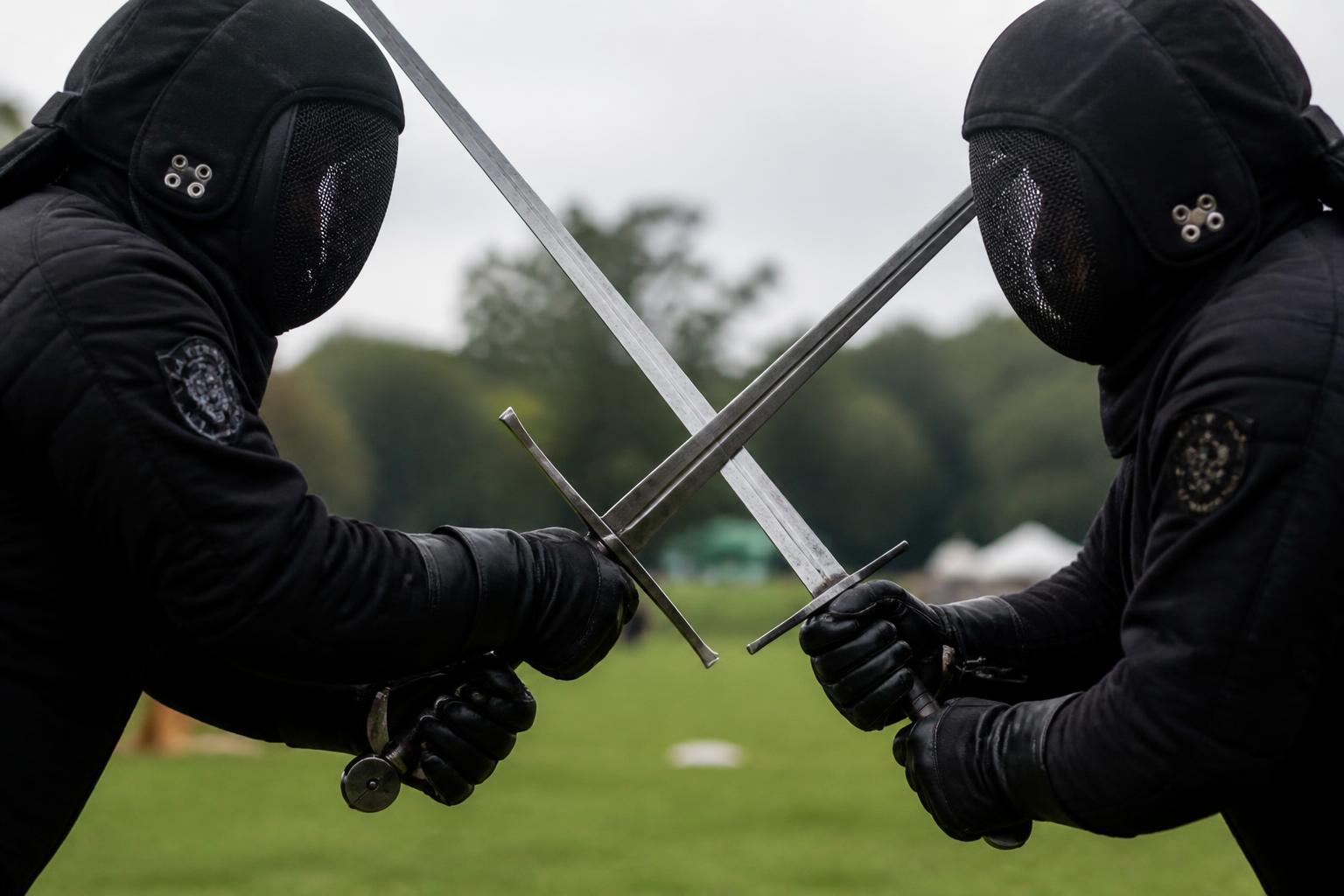
Two fencers in the bind – German longsword after Talhoffer.
Close-up of blades in the bind during HEMA longsword fencing
Blade contact and bind work – structure, distance, timing.
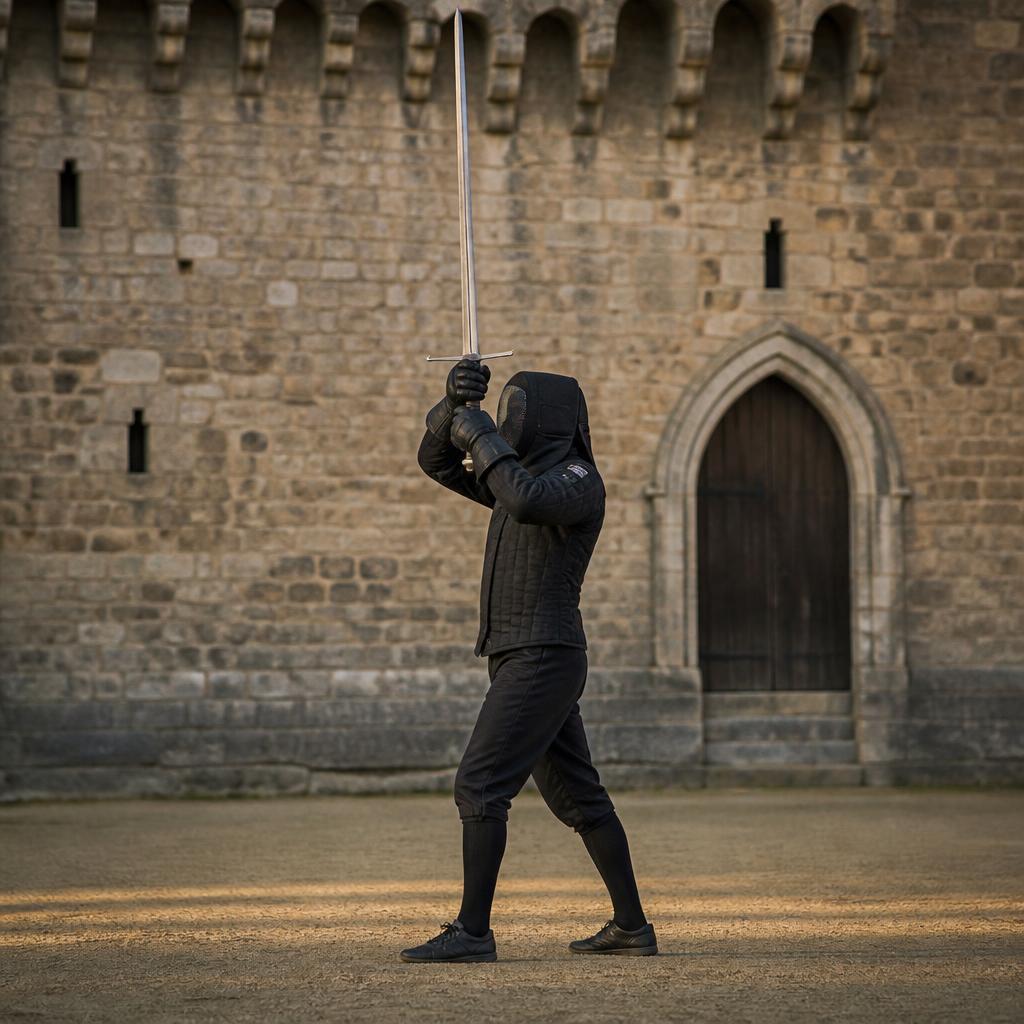
HEMA fencer in the Vom Tag guard with the longsword
‘Vom Tag’ guard – the starting point for many attacks.
HEMA equipment: longsword, gloves and fencing mask
Equipment: feder, gloves and mask – borrowed at first, later your own.
Two HEMA students during technique training in the kwoon
Technique training in the kwoon – guided by Headcoach Erich Ferlesch.