
Knowledge
Martial arts lexicon
Systems and terms grouped by cultural area – with native spelling, meaning, origin and the connections between them.
Many martial arts come from different cultures and eras – and still share a great deal. Originally people fought with and without weapons: whoever lost their weapon on the battlefield kept fighting with bare hands and feet.
Over the centuries this produced punches, elbows, knees, head butts, kicks, joint locks, throws, counter-throws, counter-locks and ground fighting. It was about bare survival. Only in modern times were many of these systems turned into sports – martial arts also became combat sports with rules, weight classes and competition.
This lexicon groups systems and terms by cultural area. Each colour line stands for one area, and the connections show what a system grew out of or which system a term belongs to. Where possible the native spelling and its literal meaning are given.
Highlighted entries are training areas at CFC Die Kampfkunstschule in Villach – one click takes you to the matching page.
Search and filter the lexicon
Filter by country of origin or cultural area, by the historically documented period of origin, and by whether it is a martial art, a combat sport, a self-defense system or a term.
Training areas at CFC Die Kampfkunstschule
Wing Chun Kung Fu
詠春 (Wing Chun) – “praised / beautiful spring”
詠春 · Wing Tsun, Ving Tsun · Gong Fu (功夫) / Kungfu / Kung Fu
Southern Chinese close-combat system within the Kung Fu family: short paths, body structure, defending and acting at the same time. At CFC in Villach, Wing Chun is one of the three core styles at CFC Die Kampfkunstschule.
Origin: China (southern China)Era: approx. 18th/19th centuryFounder: traditionally attributed to the nun Ng Mui; historically traceable from Leung Jan (19th c.), spread worldwide by Ip Man (1893–1972)Martial art
Grew out of Kung Fu (Gong Fu, 功夫) allgemeinTrain this at CFC in VillachFMA – Filipino Martial Arts
Eskrima · Arnis · Kali – “fencing” · “armour” · old collective name
Eskrima · Arnis · Kali
Weapon-based martial art with stick, knife and empty hands; angles and movement are central. At CFC part of the weapon-combat area.
Origin: PhilippinesEra: historically grown, systematised in the 20th centuryMartial art
Train this at CFC in VillachHEMA – Historische Europäische Kampfkünste
Ars Dimicatoria – “art of fencing” (Latin)
Historisches Fechten · Langes Schwert, Degen
Reconstruction of European swordsmanship from historical fight books, mainly longsword and rapier. At CFC part of the weapon-combat area.
Origin: Europe (German and Italian traditions among others)Era: sources from approx. 1300, reconstructed since the 1990sFounder: no single person – sources by Johannes Liechtenauer (14th c.), Fiore dei Liberi (c. 1409) and Hans Talhoffer (15th c.)Martial art
Train this at CFC in VillachBaraw
Baraw – “knife/dagger” (Cebuano)
Teilbereich der FMA · auch Baraw Sugbo, Daga
The knife area of the Filipino martial arts: handling and defending the short blade, range control and controlling techniques. At CFC in Villach part of the weapon-combat area.
Origin: PhilippinesEra: historically grownTerm / person
Not a style of its own – part of FMA – Filipino Martial ArtsTrain this at CFC in VillachDumog
Dumog – “wrestling”
Teilbereich der FMA · philippinisches Ringen
The grappling area of FMA: body control, locks, neck grips and throws from the clinch – often directly out of weapon situations.
Origin: PhilippinesEra: historically grownTerm / person
Not a style of its own – part of FMA – Filipino Martial ArtsTrain this at CFC in VillachPanantukan
Panantukan / Suntukan – from suntok – “punch”
Teilbereich der FMA · „Filipino Boxing“, Suntukan
The striking area of FMA: punches, elbows, head butts, disruptive techniques and attacks on arms and legs (gunting, limb destruction).
Origin: PhilippinesEra: historically grownTerm / person
Not a style of its own – part of FMA – Filipino Martial ArtsTrain this at CFC in VillachPangamut
Pangamot / Kamot – “with the hand” – empty hand
Teilbereich der FMA · Kamot-Kamot, waffenloser Bereich
Umbrella term for the empty-hand area of FMA. The movements of weapon work are transferred directly to the empty hand.
Origin: PhilippinesEra: historically grownTerm / person
Not a style of its own – part of FMA – Filipino Martial ArtsTrain this at CFC in VillachSantukan
Santukan – “fist fighting”
Teilbereich der FMA · verwandt mit Panantukan/Suntukan
Regionally used name for the fist fighting of the Filipino martial arts – depending on the lineage it is identical to panantukan or taught as its own variant.
Origin: PhilippinesEra: historically grownTerm / person
Not a style of its own – part of PanantukanTrain this at CFC in VillachBart Cham Dao
八斬刀 – “eight cutting knives”
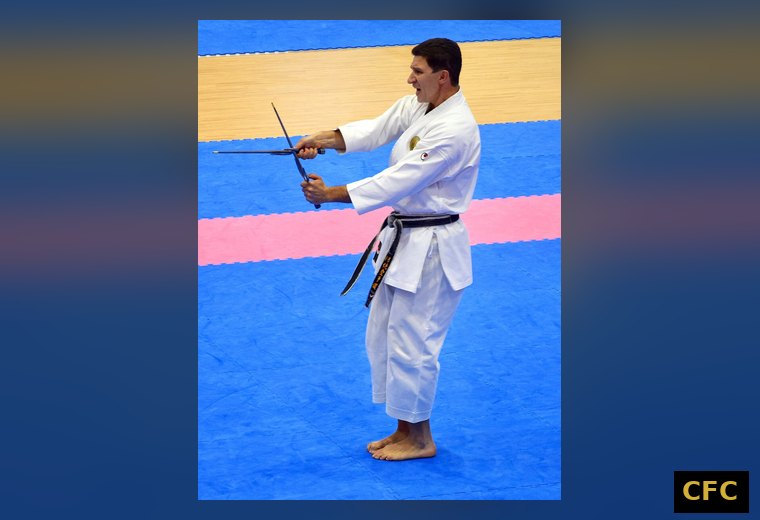
八斬刀 · Wing-Chun-Doppelmesser · Baat Jaam Do
The “eight cutting knives”: short, broad twin blades with hand guards – the highest weapon form in Wing Chun. It transfers the empty-hand structure onto the blade: short paths, cover through position, defending and cutting at the same time. Historically a close-quarters weapon on boats and in the narrow lanes of southern China.
Origin: China (southern China) – Wing ChunEra: traditional, form documented from the 19th centuryWeapon
Not a style of its own – part of Wing Chun Kung FuTrain this at CFC in Villach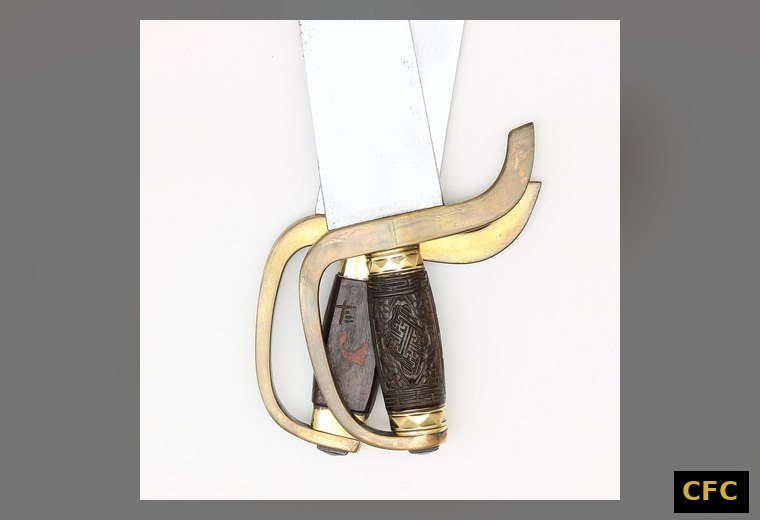
Luk Dim Boon Kwan
六點半棍 – “six-and-a-half point pole”
六點半棍 · Wing-Chun-Langstock
The “six-and-a-half point pole”: a pole up to three metres long from the tradition of southern China’s river boatmen. Only six and a half techniques, driven by body power and structure – training for distance and force transmission.
Origin: China (southern China) – Wing ChunEra: traditionalWeapon
Not a style of its own – part of Wing Chun Kung FuTrain this at CFC in VillachOlisi / Baston
Rattanstock · FMA-Grundwaffe
The rattan stick is the teaching weapon of FMA – not because it is the deadliest, but because its movements transfer to blade and empty hand. Historically villages trained with the stick because blades were banned under Spanish rule.
Origin: PhilippinesEra: traditional, systematised from the 19th centuryWeapon
Not a style of its own – part of FMA – Filipino Martial ArtsTrain this at CFC in Villach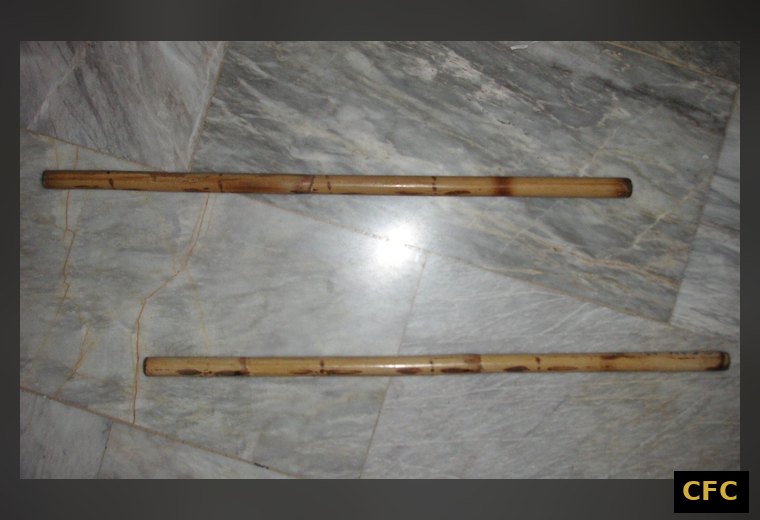
Langschwert
Anderthalbhänder · HEMA-Kernwaffe
The lead weapon of the European fight books from Liechtenauer to Meyer: two-handed, with cuts, thrusts, winding and wrestling at the sword. Everything HEMA reconstructs today is written in those manuscripts.
Origin: Central Europe (Germany, Italy)Era: approx. 1350–1550Weapon
Not a style of its own – part of HEMA – Historische Europäische KampfkünsteTrain this at CFC in Villach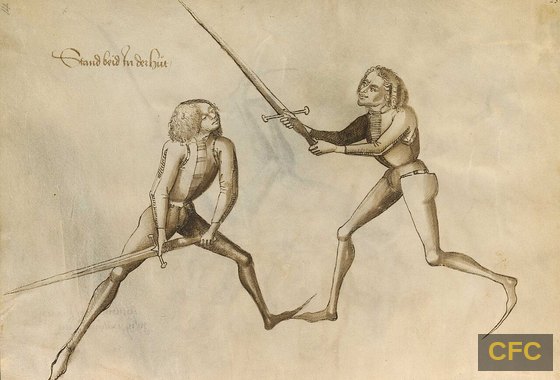
China – Kung Fu / Wushu
How they connect
Lei Tai Kickboxen
擂台 (Lèi Tái) – “raised fighting platform” – a stage without ropes
擂台 · chinesisches Vollkontakt-Kickboxen (Sanda-Regelwerk)
Chinese full-contact combat sport fought on the raised fighting platform (“lei tai”) without ropes: whoever is thrown off or gives up loses. Historically these bouts were fought without protection and sometimes to the death; rules, protective gear and today's competition format only came later. Headcoach Erich Ferlesch brings full-contact experience from lei tai kickboxing – not to be confused with Thai boxing.
Origin: ChinaEra: platform bouts since the Song dynasty, modern competition format from the 20th centuryCombat sport
Grew out of Sanda / SanshouHakka-Systeme
客家 – “guest families” – an ethnic group of southern China
客家 · Southern Praying Mantis, Bak Mei, Dragon Style
A family of southern Chinese close-range systems with short paths, compact structure and strong body mechanics – structurally related to Wing Chun.
Origin: Southern China (Hakka communities)Era: from the 18th/19th centuryMartial art
Grew out of Kung Fu (Gong Fu, 功夫) allgemeinChoy Lee Fut
蔡李佛 – after the teachers Choy, Lee and the Buddhist heritage (Fut)
蔡李佛 · Choy Li Fut
Southern Chinese system with wide, powerful arm techniques and mobile footwork. Combines southern hand work with northern kicks.
Origin: China (Guangdong)Era: founded in 1836Founder: Chan Heung (1806–1875), founded in 1836Martial art
Grew out of Kung Fu (Gong Fu, 功夫) allgemeinHung Gar
洪家 – “Hung family”
洪家 · Hung Ga Kuen
Southern Chinese system with deep stances, strong structure and animal forms (tiger and crane among others). Known through the Wong Fei-hung lineage.
Origin: China (southern China)Era: from the 18th/19th centuryFounder: traditionally attributed to Hung Hei-gun (18th/19th c.)Martial art
Grew out of Shaolin Kung FuYiquan
意拳 (Yìquán) – “intention boxing”
意拳 · Dachengquan (大成拳)
Internal martial art without fixed forms, developed out of Xingyiquan. Its core is standing practice (zhan zhuang), plus movement work (shili), footwork and free practice – intention (yi) directs the force.
Origin: China (Beijing)Era: 1920s, founded by Wang XiangzhaiFounder: Wang Xiangzhai (1885–1963)Martial art
Grew out of Xingyi QuanKung Fu (Gong Fu, 功夫) allgemein
功夫 (Gong Fu) – “skill acquired through time and effort”
Kungfu · Wushu (武術) · Quanfa
Umbrella term for the Chinese martial arts; literally “skill acquired through time and effort”. In Chinese itself, Wushu is the more common term.
Origin: ChinaEra: grown over centuriesTerm / person
Tai Chi Chuan
太極拳 (Taijiquan) – “boxing of the supreme ultimate”
太極拳 · Taijiquan · Chen, Yang, Wu (Hao), Wu, Sun
Internal martial art with slow forms, structure work and partner drills (tuishou). It is transmitted in five major family lines: Chen (the oldest, with fast power releases), Yang (the most widespread), Wu/Hao, Wu and Sun. Today mostly practiced as a health and movement art.
Origin: ChinaEra: from approx. the 17th centuryFounder: Chen Wangting (17th c., Chen family); popularised by Yang Luchan (1799–1872)Martial art
Grew out of Wudang-Boxen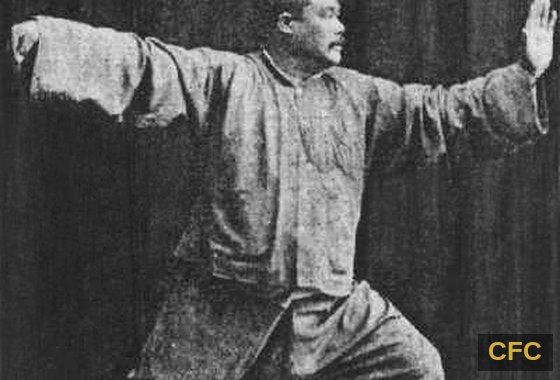
Wudang-Boxen
武當 · Wudang Quan
Collective name for the “internal” Daoist-influenced systems with sword and hand forms. Emphasises softness, breathing and body axis.
Origin: China (Wudang mountains)Era: traditionally attributed to Daoist monasteriesTerm / person
Wuji
無極 (Wuji) – “the limitless”
無極
Describes the state before any movement – the starting posture of many internal systems. Practised as a standing and breathing exercise.
Origin: ChinaEra: philosophical concept, used in forms since the Qing eraTerm / person
Grew out of Tai Chi ChuanXingyi Quan
形意拳 (Xingyiquan) – “form and intention boxing”
形意拳
Internal martial art with straight, very direct attacking lines (five elements, animal forms). Short, powerful, with little evasion.
Origin: China (Shanxi/Hebei)Era: from approx. the 17th/18th centuryFounder: traditionally attributed to Ji Longfeng (17th c.)Martial art
Grew out of Wudang-BoxenBa Gua Zhang
八卦掌 (Baguazhang) – “eight trigram palm”
八卦掌
Internal martial art built on circle walking, turning and constant change of position. Palm techniques rather than punches dominate.
Origin: China (Beijing)Era: 19th centuryFounder: Dong Haichuan (approx. 1797–1882)Martial art
Grew out of Wudang-BoxenI Liq Chuan
意力拳 (Yili Quan) – “boxing of intention and force”
意力拳 · Zhong Xin Dao
Internal martial art focused on awareness, contact sensitivity and center rather than fixed technique sequences. Strongly partner-based (spinning hands).
Origin: Malaysia / ChinaEra: 20th century (Chin Lik Keong)Founder: Chin Lik Keong (b. 1935), continued by Sam F. S. ChinMartial art
Grew out of Tai Chi ChuanShaolin Kung Fu
少林 (Shàolín) – “young forest” – the monastery's name
少林 · Shaolin Quan
External Kung Fu system with animal forms, jumps, weapon forms and demanding basics. Formative for many later Chinese systems.
Origin: China (Henan)Era: monastery founded 495 AD, martial tradition from the Middle AgesFounder: monastery founded in 495; the martial tradition is attributed to Bodhidharma (not historically confirmed)Term / person
Grew out of Kung Fu (Gong Fu, 功夫) allgemeinSanda / Sanshou
散打 / 散手 (Sanda / Sanshou) – “free fighting” / “free hand”
散打
Chinese full-contact combat sport combining strikes, kicks and throws. A sporting distillation of traditional Kung Fu techniques.
Origin: ChinaEra: modern competition format from the 1970sFounder: no single founder – developed from 1979 as a state competition format in ChinaCombat sport
Grew out of Kung Fu (Gong Fu, 功夫) allgemeinShuai Jiao
摔跤 – “throwing and falling”
摔跤 · chinesisches Ringen
Chinese throwing art with jacket grips, standing wrestling without ground work. It provides the throwing and clinch layer in sanda and lei tai kickboxing.
Origin: ChinaEra: ancient roots, modern competition format from the 20th centuryCombat sport
Grew out of Kung Fu (Gong Fu, 功夫) allgemeinTanglangquan (Mantis)
螳螂拳 – “praying mantis fist”
螳螂拳 · Gottesanbeterin-Stil
Kung Fu system with hooking hands, fast hand sequences and constant sticking to the opponent’s arm. One of the defining systems in Hong Kong since the 1950s.
Origin: China (Shandong), widely spread in Hong KongEra: from the 17th/18th centuryFounder: traditionally attributed to Wang Lang (17th/18th c.)Martial art
Grew out of Kung Fu (Gong Fu, 功夫) allgemeinJian & Dao
劍 / 刀 – “sword” / “sabre”
劍 / 刀 · chinesisches Schwert und Säbel
The jian (“scholar’s sword”) is double-edged and thrust-oriented, the dao single-edged and cut-oriented – the standard weapon of Chinese armies. Both live on in the forms of tai chi, Shaolin and wushu, though mostly as practice and display forms.
Origin: ChinaEra: Bronze Age to the modern eraWeapon
Not a style of its own – part of Kung Fu (Gong Fu, 功夫) allgemein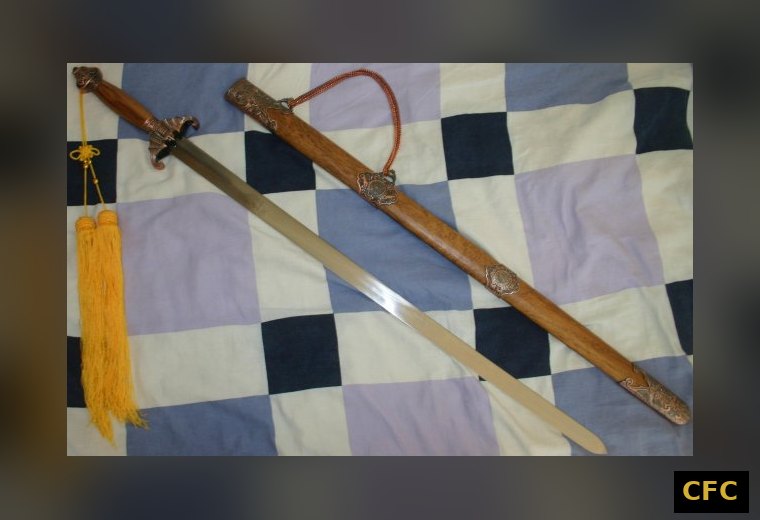
Japan & Okinawa – budō
Ninjutsu
忍術 – “art of enduring / concealment”
忍術 · Ninpō · Shinobi
A collection of methods for reconnaissance, concealment, unarmed combat and weapon use. Hard to document historically; today mainly transmitted through schools such as Bujinkan.
Origin: Japan (Iga, Kōga)Era: from the 15th century, modern schools from the 20th centuryFounder: no verified founder; modern transmission through Toshitsugu Takamatsu (1889–1972) and Masaaki Hatsumi (1931–2024)Martial art
Grew out of Jiu Jitsu (Ju-Jutsu)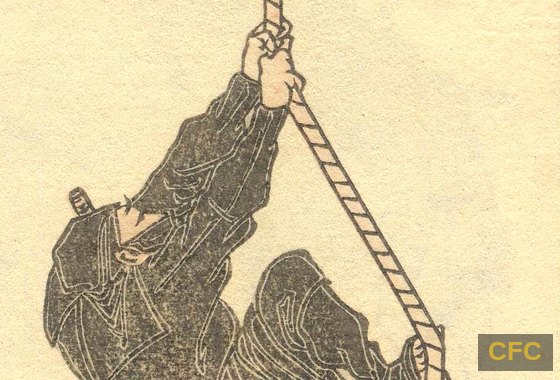
Kenpo Karate
拳法 (Kenpō) – “fist method”
American Kenpo · Kempo (拳法)
Strike-oriented system with fast hand combinations and clear self-defense sequences. Combines Japanese-Okinawan roots with Chinese influences.
Origin: Japan/Okinawa → Hawaii, USAEra: modern form from the 1940s/1950sFounder: James Mitose and William K. S. Chow; American Kenpo through Ed Parker (1931–1990)Martial art
Grew out of Karate-DōShorinji Kempo
少林寺拳法 – “fist method of the Shaolin temple”
少林寺拳法
Japanese system combining strikes and kicks (gōhō) with locks and throws (jūhō), paired with a strongly educational orientation.
Origin: Japan (Shikoku)Era: founded in 1947Founder: Dōshin Sō (1911–1980), founded in 1947Martial art
Grew out of Shaolin Kung FuSumo
相撲 – “mutual striking / wrestling”
相撲 · Ōzumō
Wrestling inside a ring (dohyō): whoever steps out or touches the ground with anything but the soles of the feet loses. Deeply shaped by Shintō ritual.
Origin: JapanEra: ritual roots over 1,000 years old, professional sport since the 17th centuryCombat sport
Grew out of Ringen / Wrestling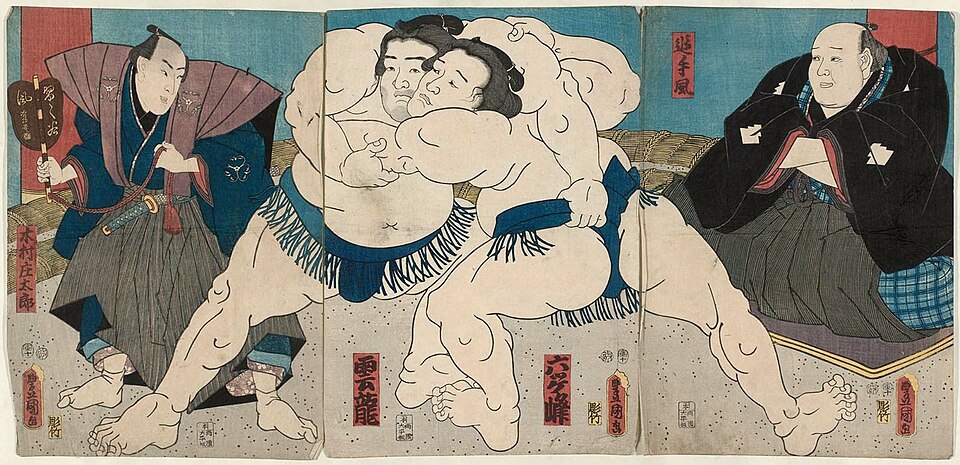
Taikiken
太気拳 – “fist of great energy”
太気拳 · japanische Linie des Yiquan (意拳)
Training of stance, perception and power development without fixed forms: standing practice (ritsuzen), walking (hai) and free practice are central.
Origin: Japan (derived from Chinese Yiquan)Era: from the 1940s/1950sFounder: Kenichi Sawai (1903–1988), student of Wang XiangzhaiMartial art
Grew out of YiquanKarate-Dō
空手道 (Karate-dō) – “way of the empty hand” – originally 唐手 “China hand”, renamed in the 1930s
空手道 · Karate Do · Shotokan, Gōjū-Ryū, Shitō-Ryū, Wadō-Ryū, Kyokushin · Begründer des modernen Karate: Gichin Funakoshi
Unarmed martial art with punches, kicks and blocks, organized in kata and kumite. One of the most widespread combat sports in Europe.
Origin: Japan (Okinawa)Era: roots from the 17th century, modern styles from around 1920Founder: Gichin Funakoshi (1868–1957) brought karate from Okinawa to Japan in 1922; forerunner Ankō Itosu (1831–1915)Martial art
Grew out of Kung Fu (Gong Fu, 功夫) allgemein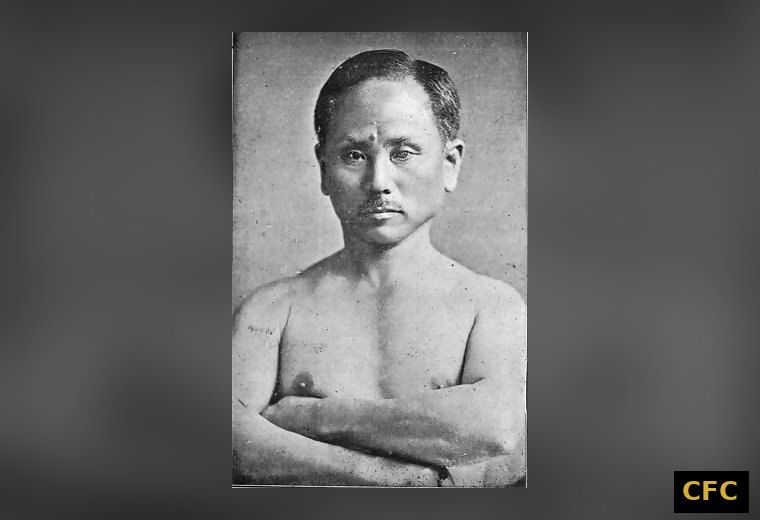
Judo
柔道 – “the gentle way”
柔道
Throwing and grappling sport derived from Jiu Jitsu, Olympic since 1964. Its principle: use the opponent's force instead of opposing it.
Origin: JapanEra: 1882 (Jigoro Kano)Founder: Jigorō Kanō (1860–1938), Kōdōkan in 1882Combat sport
Grew out of Jiu Jitsu (Ju-Jutsu)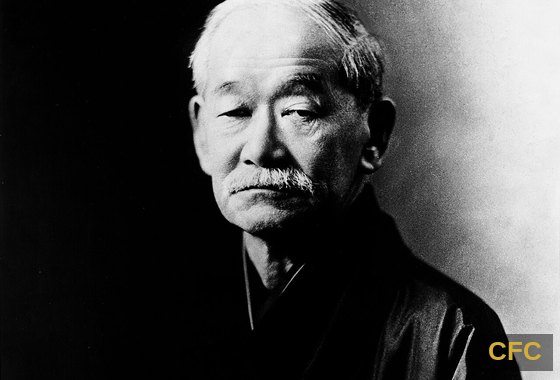
Jiu Jitsu (Ju-Jutsu)
柔術 – “gentle art”
柔術
Historical samurai close-combat art for fighting unarmed or with short weapons: locks, throws, chokes. The origin of Judo and BJJ.
Origin: JapanEra: samurai era, from approx. the 16th centuryMartial art
Aikido
合気道 – “way of harmonising energy”
合気道
Japanese martial art of joint locks, throws and circular movement, practiced without competition. Emphasises harmony and redirection.
Origin: JapanEra: 1920s–40s (Morihei Ueshiba)Founder: Morihei Ueshiba (1883–1969), known as ŌsenseiMartial art
Grew out of Daitō-Ryū Aiki-Jūjutsu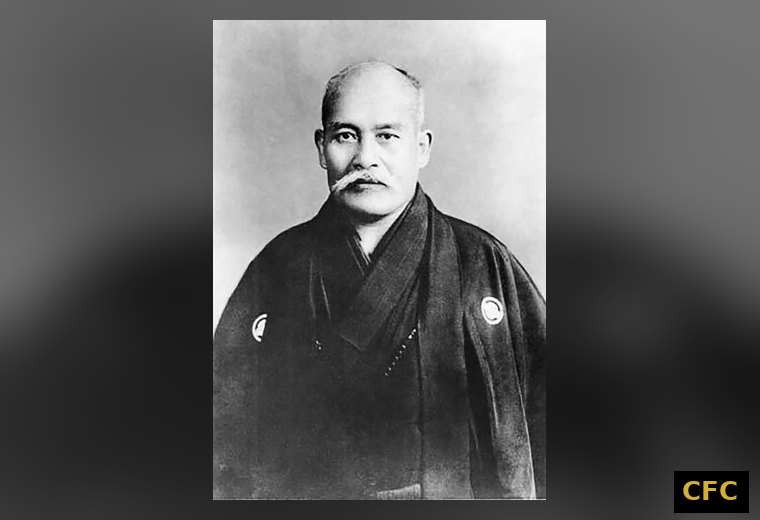
Kendo
剣道 – “way of the sword”
剣道
Japanese sword fencing with bamboo sword (shinai) and armour. Sport-regulated, with defined target areas and strong etiquette.
Origin: JapanEra: from Kenjutsu, modern form from the 18th/19th centuryFounder: no single founder – from kenjutsu schools, modern form via the Dai Nippon Butoku Kai (from 1895)Combat sport
Grew out of Kobudo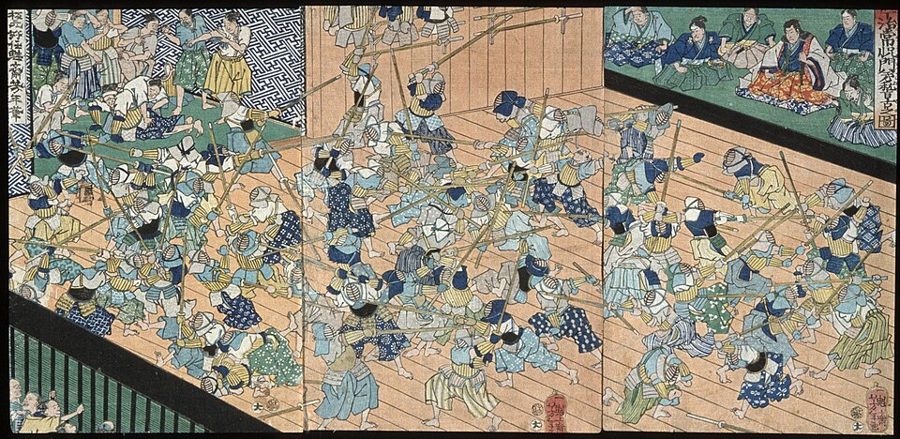
Iaido
居合道 – “way of drawing the sword”
居合道
The art of drawing the sword: draw, cut, cleanse and resheath in precise solo forms. No sparring, maximum precision.
Origin: JapanEra: from Iaijutsu, from the 16th centuryMartial art
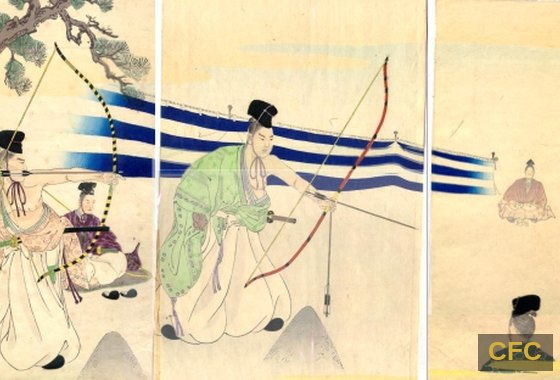
Grew out of KendoKyudo
弓道 – “way of the bow”
弓道
Japanese archery as a “way” discipline with a strict ritual of movement. Posture matters as much as hitting the target.
Origin: JapanEra: from the samurai archery schools, modern from the 20th centuryMartial art
Kobudo
古武道 – “old martial way”
古武道
Weapon art with bo, sai, tonfa, nunchaku and kama, closely linked to Karate. Originally developed from everyday farming tools.
Origin: Japan (Okinawa)Era: from the 17th centuryMartial art
Bujinkan
武神館 – “hall of the divine warrior”
武神館 · Schule · Ninjutsu-Linie
Not a style of its own but an organisation combining nine old Japanese schools (ryūha); today the best-known vehicle for ninjutsu.
Origin: JapanEra: founded from the 1970sFounder: Masaaki Hatsumi (1931–2024), founded in the 1970sTerm / person
Not a style of its own – part of NinjutsuKatana
刀 / 日本刀 – “sword” / “Japanese sword”
刀 · japanisches Schwert
The curved, single-edged blade of the samurai, made of folded steel with a differentially hardened edge. It was a secondary, close-range weapon – on the battlefield samurai used bow and spear first. Today it is trained in iaidō (drawing and cutting) and kendō (competition with the shinai).
Origin: JapanEra: from the 14th centuryWeapon
Not a style of its own – part of Iaido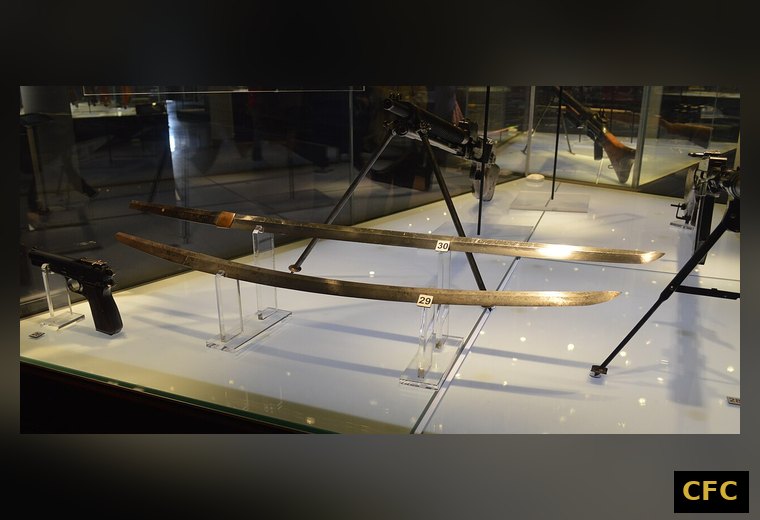
Shuriken
手裏剣 – “blade hidden in the hand”
手裏剣 · Wurfklingen
Small throwing blades – usually simple spikes (bo-shuriken), less often the famous stars. They were never a killing weapon but a tool for distraction and delay in ninjutsu and some samurai schools. The film image of the silent star-thrower is fiction.
Origin: JapanEra: documented from the 17th centuryWeapon
Not a style of its own – part of Ninjutsu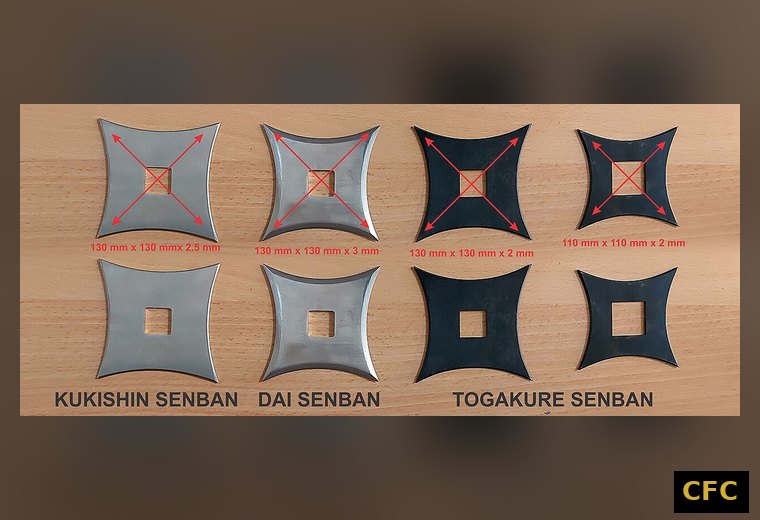
Bō, Sai, Tonfa, Nunchaku
Waffen des Kobudō (Okinawa)
The weapons of Okinawan kobudō come from everyday life and official duty: bō (carrying pole), sai (the forked weapon of law officers), tonfa (mill-stone handle) and nunchaku. They emerged at a time when weapon ownership on Okinawa was heavily restricted.
Origin: OkinawaEra: 17th–19th centuryWeapon
Not a style of its own – part of Kobudo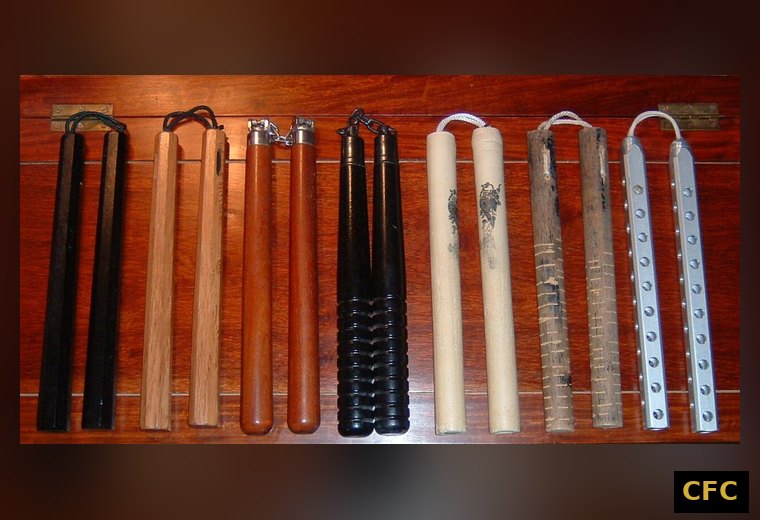
Shōtōkan
松濤館 – “hall of the pine waves” – after Funakoshi's pen name
松濤館 · Shotokan Karate
The most widespread karate style worldwide: long, deep stances, straight lines, clearly separated techniques. Named after “Shōtō”, Gichin Funakoshi's pen name.
Origin: Japan (from Okinawa)Era: from 1936 (name of Funakoshi's training hall)Founder: Gichin Funakoshi (1868–1957) and his son Yoshitaka Funakoshi (1906–1945)Martial art
Grew out of Karate-DōGōjū-Ryū
剛柔流 – “hard and soft school”
剛柔流 · „harte und weiche Schule“
Okinawan karate with short range, breathing work (sanchin) and circular blocks. Combines hard striking with soft redirection; clear southern Chinese influences.
Origin: Japan (Okinawa, Naha)Era: named from 1933, rooted in 19th-century Naha-teFounder: Chōjun Miyagi (1888–1953), name used from 1933Martial art
Grew out of Karate-DōShitō-Ryū
糸東流 – formed from the names of the teachers Itosu and Higaonna
糸東流
The kata-richest of the four major karate styles: Kenwa Mabuni preserved the traditions of his teachers Ankō Itosu (Shuri-te) and Kanryō Higaonna (Naha-te).
Origin: Japan (Okinawa → Osaka)Era: founded in 1934Founder: Kenwa Mabuni (1889–1952)Martial art
Grew out of Karate-DōWadō-Ryū
和道流 – “school of the way of harmony”
和道流 · „Schule des Weges der Harmonie“
Karate style with a strong jūjutsu share: evasion and body shifting (taisabaki) instead of force against force. Hironori Ōtsuka was a master of Shindō Yōshin-ryū before training with Funakoshi.
Origin: JapanEra: founded in 1939Founder: Hironori Ōtsuka (1892–1982), founded in 1939Martial art
Grew out of Karate-DōKyokushin
極真 – “ultimate truth”
極真会館 · Kyokushinkai
Full-contact karate: bouts without protective gear, punches to the body and kicks also to the head, punches to the head forbidden. Known for hard conditioning and breaking tests.
Origin: JapanEra: founded in 1964Founder: Masutatsu “Mas” Oyama (1923–1994), founded in 1964Combat sport
Grew out of Karate-DōShōrin-Ryū
少林流 – “Shaolin school”
少林流 · Shuri-te
Older Okinawan line with more natural, higher stances and fast angular steps. The name refers to the Chinese Shaolin tradition.
Origin: Japan (Okinawa, Shuri)Era: named from 1933, rooted in 18th/19th-century Shuri-teFounder: Chōshin Chibana (1885–1969), student of Ankō ItosuMartial art
Grew out of Karate-DōDaitō-Ryū Aiki-Jūjutsu
大東流合気柔術 – “great eastern school of aiki-jūjutsu”
大東流合気柔術
Locking, throwing and controlling system from the samurai tradition and the direct predecessor of aikidō: Morihei Ueshiba was a student of Sōkaku Takeda.
Origin: Japan (Aizu)Era: publicly taught from 1898Founder: Sōkaku Takeda (1859–1943) as the school’s reviverMartial art
Grew out of Jiu Jitsu (Ju-Jutsu)Tenshin Shōden Katori Shintō-Ryū
天真正伝香取神道流 – “truly transmitted Katori Shintō school”
天真正伝香取神道流 · Koryū-Kenjutsu
One of Japan's oldest continuously transmitted martial schools (koryū): sword, staff, spear, naginata and short sword in fixed partner forms – war craft from before the sporting era.
Origin: Japan (Katori, Chiba)Era: founded in the 15th centuryFounder: Iizasa Chōisai Ienao (approx. 1387–1488)Martial art
Grew out of KobudoNaginata-jutsu / Atarashii Naginata
薙刀術 – “art of the pole blade”
薙刀術
Fighting with the pole blade: wide arcs, range control, attacks to head, torso and shin. In the Edo period it was practiced above all by women of the warrior class.
Origin: JapanEra: battlefield use from the 12th century, sport form from 1955Martial art
Grew out of KobudoJōdō / Jōjutsu
杖道 – “way of the staff”
杖道 · Shintō Musō-Ryū
Fighting with the short staff (jō) against the sword. Tradition holds that Musō Gonnosuke developed it after a defeat by Miyamoto Musashi.
Origin: JapanEra: 17th centuryFounder: Musō Gonnosuke (17th c.), Shintō Musō-ryūMartial art
Grew out of KobudoShooto
修斗 – “to train fighting”
修斗 · Shoot Wrestling
Early Japanese MMA format combining wrestling, striking and submissions – a forerunner of today's mixed martial arts in Asia.
Origin: JapanEra: founded in 1985Founder: Satoru Sayama (b. 1957), founded in 1985Combat sport
Grew out of Jiu Jitsu (Ju-Jutsu)Kudo (Daidō Juku)
空道 – “way of emptiness”
空道 · 大道塾
Full-contact system with a head-protection visor: strikes, kicks, throws and ground fighting in one rule set – karate roots extended clearly towards all-round fighting.
Origin: JapanEra: founded in 1981Founder: Azuma Takashi (b. 1949), Daidō Juku 1981Combat sport
Grew out of Karate-Dō
Korea
How they connect
Taekwondo
태권도 (跆拳道) – “way of foot and fist”
태권도
Korean martial art with pronounced kicking technique and forms (poomsae), Olympic since 2000. Strongly rooted in European grassroots sport.
Origin: KoreaEra: 1950sFounder: Choi Hong-hi (1918–2002) coined the name in 1955 and founded the ITF; the Olympic line runs via Kukkiwon/WTCombat sport
Grew out of Karate-Dō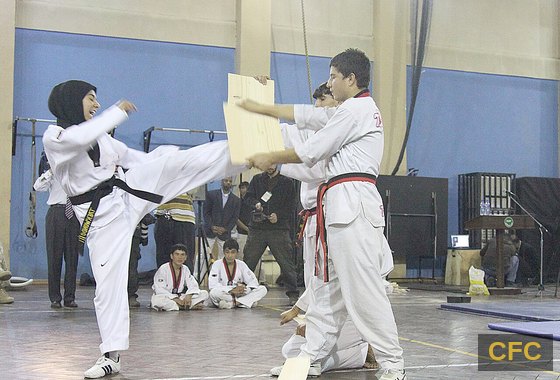
Hapkido
합기도 (合氣道) – “way of coordinated energy”
합기도
Korean self-defense system of joint locks, throws, kicks and stick work. Combines soft redirection with hard techniques.
Origin: KoreaEra: from the 1940s/50sFounder: Choi Yong-sool (1904–1986), student of the Daitō-ryū lineageSelf-defense system
Grew out of Jiu Jitsu (Ju-Jutsu)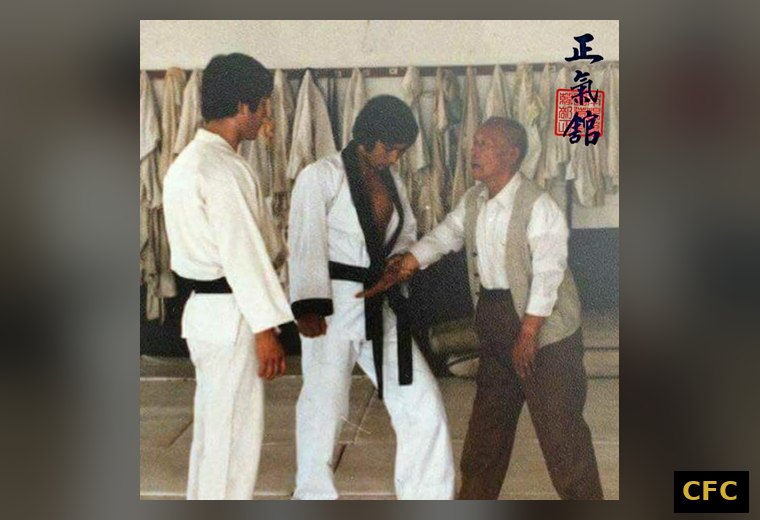
Taekkyon
택견 – “old foot-fighting game”
택견 · 태껸
The oldest transmitted Korean martial art: flowing footwork, a springing rhythm, kicks, pushes and leg sweeps. Regarded as the folk predecessor of the modern Korean systems.
Origin: KoreaEra: documented from the 18th century, Korean intangible cultural heritage since 1983Founder: no single founder – folk tradition, modern transmission through Song Duk-ki (1893–1987)Martial art
Grew out of Subak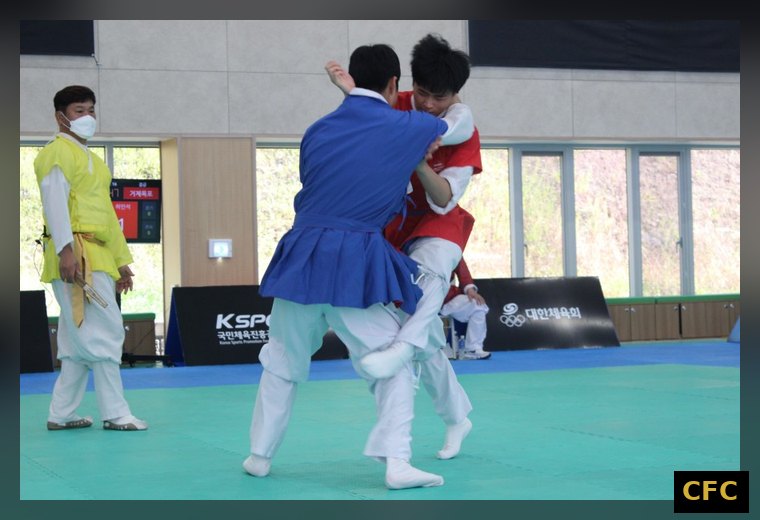
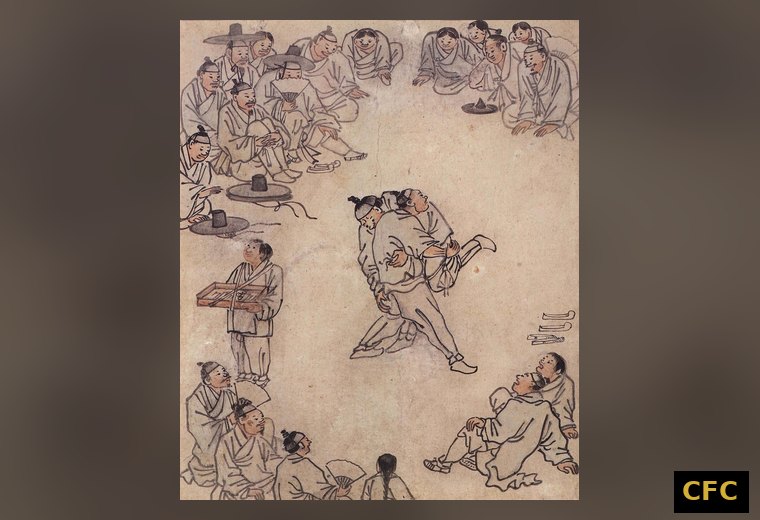
Ssireum
씨름 – “wrestling”
씨름 · koreanisches Ringen
Korean belt wrestling in a sand ring: both grip the satba belt; whoever first touches the ground with knee or torso loses. UNESCO cultural heritage since 2018.
Origin: KoreaEra: depictions from the 4th century, genre paintings from the 18th centuryCombat sport
Tang Soo Do
당수도 (唐手道) – “way of the Tang hand”
당수도 · Soo Bahk Do
Korean system from the post-1945 kwan era: forms, hard hand and foot techniques, technically close to Shotokan karate but with Korean kicking work.
Origin: KoreaEra: from 1945 (Hwang Kee, Moo Duk Kwan)Founder: Hwang Kee (1914–2002), Moo Duk Kwan 1945Martial art
Grew out of Karate-Dō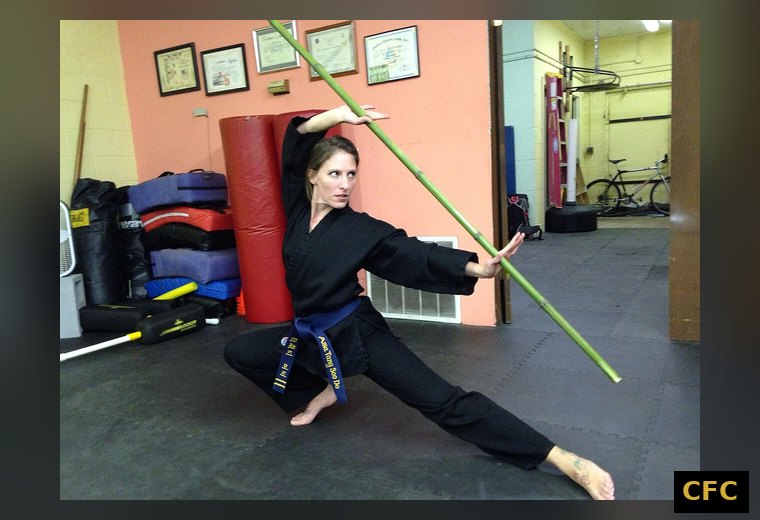
Kuk Sool Won
국술원 (國術院) – “institute of national martial arts”
국술원
A comprehensive Korean system: throws, joint locks, kicks, breakfalls, weapons and breathing work. Presents itself as a synthesis of the Korean martial heritage.
Origin: KoreaEra: founded in 1958 (In-hyuk Suh)Founder: In-hyuk Suh (b. 1939), founded in 1958Martial art
Grew out of Hapkido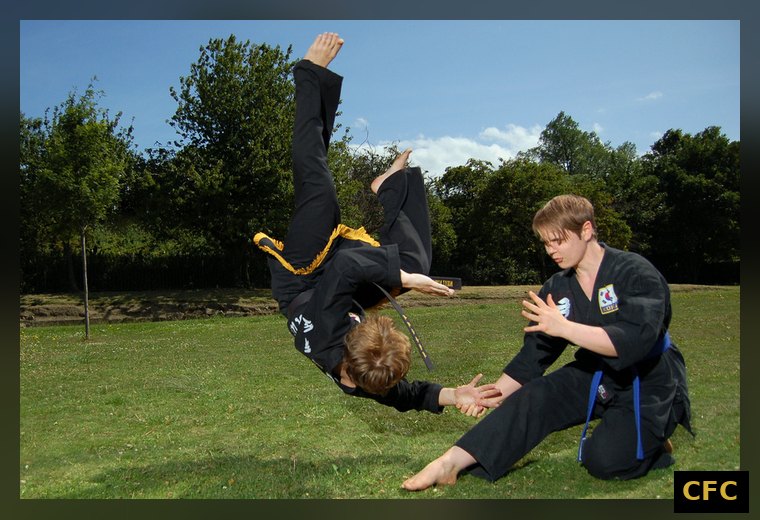
Hwa Rang Do
화랑도 (花郎徒) – “way of the flowering youth”
화랑도
Modern Korean system covering striking, locking, throwing and weapons. The name refers to the hwarang, a youth and warrior elite of the Silla kingdom; a continuous historical lineage is not documented.
Origin: KoreaEra: founded in 1960 (Joo Bang Lee), named after the hwarang of the Silla kingdomFounder: Joo Bang Lee (b. 1938), founded in 1960Martial art
Grew out of HapkidoSubak
수박 (手搏) – “hand fighting”
수박 · 手搏
Historic Korean hand-fighting form, mentioned in court chronicles as an examination and contest discipline. Alongside taekkyon it is regarded as a root of the later Korean systems.
Origin: KoreaEra: mentioned in Goryeo and Joseon chroniclesMartial art
Southeast Asia
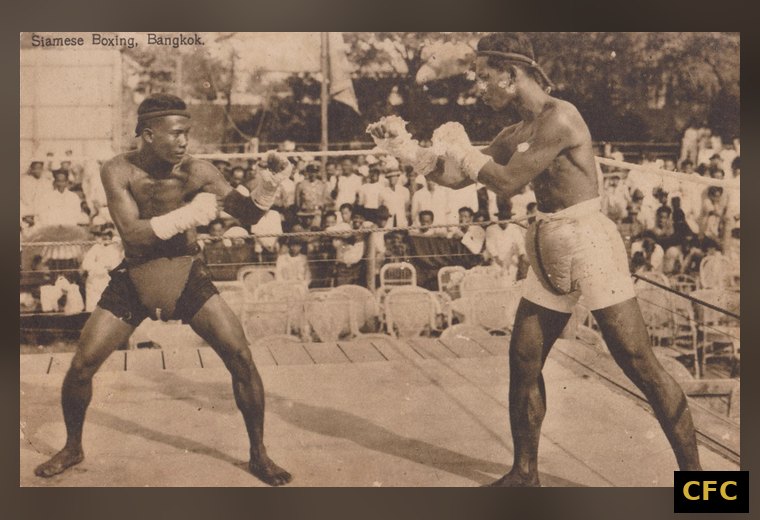
Muay Thai
มวยไทย – “Thai boxing”
Thaiboxen
Full-contact sport using fists, elbows, knees and kicks plus clinch work. Considered one of the toughest striking sports.
Origin: ThailandEra: historical roots, modern rules from around 1920Combat sport
Viet Vo Dao
Việt Võ Đạo – “way of Vietnamese martial art”
Vovinam
Vietnamese martial art with strikes, kicks, scissor takedowns and weapon forms. Well established in France and Germany.
Origin: VietnamEra: 1938 (Nguyen Loc)Martial art
Pencak Silat
Pencak Silat – “artful movement” and “fighting”
Umbrella term for hundreds of Indonesian Silat systems with low stances, locks, throws and blade work. Strongly regional in character.
Origin: Indonesia / MalaysiaEra: historically grown, federation since 1948Martial art
Silat-Systeme (Harimau, Cimande u. a.)
Family of Southeast Asian martial arts with distinctive low-line work and a strong knife culture. Every school has its own forms.
Origin: Southeast AsiaEra: pre-colonial rootsTerm / person
Grew out of Pencak SilatLethwei
လက်ဝှေ့ – “fist fighting” (Burmese)
Burmesisches Boxen
The hardest variant of Southeast Asian ring fighting: fists, elbows, knees, kicks and additionally the head butt, traditionally without gloves. Known as the “art of nine limbs”.
Origin: Myanmar (Burma)Era: historic roots, modern rules from the 20th centuryCombat sport
Bokator
ល្បុក្កតោ (Labokkatao) – “pounding the lion”
Kun Lbokator
Ancient Khmer battlefield system with elbows, knees, throws, locks and weapons; the temple reliefs of Angkor depict its techniques. Rebuilt after being nearly lost entirely.
Origin: CambodiaEra: roots in the Angkor era, revived from 2001Martial art
Vovinam
Vovinam Việt Võ Đạo – “way of Vietnamese martial art”
Vovinam Việt Võ Đạo
The best-known Vietnamese system: strikes, kicks, locks, throws and its characteristic flying scissor leg techniques. Today practiced worldwide as competition and mass sport.
Origin: Vietnam (Hanoi)Era: founded in 1938Founder: Nguyễn Lộc (1912–1960), founded in 1938Combat sport
Grew out of Viet Vo DaoVõ Cổ Truyền
Võ Cổ Truyền – “transmitted martial art”
Bình Định · traditionelles vietnamesisches Kampfsystem
Umbrella term for Vietnam’s old village and family systems. Bình Định is regarded as its heartland: forms with stick, sabre and twin knives, close range, deep stances.
Origin: Vietnam (Bình Định province)Era: traditional, documented from the 18th centuryMartial art
Not a style of its own – part of Viet Vo DaoNhất Nam
nordvietnamesisches System
Built on old northern Vietnamese traditions: soft, evasive movement and attacks on sensitive points instead of matching strength with strength.
Origin: Vietnam (Nghệ An / Thanh Hóa)Era: modern systematisation from 1983Founder: Ngô Xuân Bính (b. 1957)Martial art
Grew out of Viet Vo DaoSilat Cimande
Pencak Silat Cimande · Westjava (Sunda)
One of Java’s oldest silat schools: hard forearm work, deep stances, hand-edge strikes and its own healing tradition (bone setting and massage).
Origin: Indonesia (West Java)Era: 18th centuryMartial art
Not a style of its own – part of Pencak SilatSetia Hati Terate
PSHT · Pencak Silat, Ostjava
Indonesia’s largest organized silat school: a fixed curriculum of strikes, kicks, throws and weapon forms combined with strict character training.
Origin: Indonesia (Madiun, East Java)Era: founded in 1922Founder: Ki Ngabehi Soerodiwirjo (1869–1944)Martial art
Not a style of its own – part of Pencak SilatKuntao
Kun Tao · chinesisch-indonesische Systeme
Umbrella term for the Kung Fu systems of Chinese emigrants in Southeast Asia that blended with silat. Marked by close range and much elbow and gripping work.
Origin: Indonesia / Malaysia (Chinese communities)Era: handed down since the colonial eraMartial art
Grew out of Kung Fu (Gong Fu, 功夫) allgemeinTarung Derajat
AA-Boxer · modernes indonesisches System
Modern Indonesian full-contact system born from its founder’s street experience: direct punches, kicks and throws, officially used by military and police.
Origin: Indonesia (Bandung, Java)Era: founded in the 1960sFounder: Achmad Dradjat (b. 1951)Self-defense system
Grew out of Pencak SilatSilat Melayu
malaiisches Silat
The root form of Malay silat: flowing footwork (langkah), control of the opponent’s limbs and the kris as the traditional weapon.
Origin: Malaysia / Malay peninsulaEra: traditional, referenced from the 15th centuryMartial art
Not a style of its own – part of Silat-Systeme (Harimau, Cimande u. a.)Silat Seni Gayong
Gayong · malaysische Schule
Malaysia’s best-known silat school: throws, locks, knife work and ground positions – long a training basis for military and police.
Origin: MalaysiaEra: founded in 1942Founder: Dato' Meor Abdul Rahman (1915–1991)Self-defense system
Grew out of Silat MelayuSilat Cekak
Cekak Hanafi · Kedah
A purely defensive system without forms: 21 fixed base defenses that only react to the attack and move straight into control.
Origin: Malaysia (Kedah)Era: traditional, modern school from 1965Founder: Ustaz Hanafi bin Ahmad (systematised in 1962)Self-defense system
Grew out of Silat MelayuTomoi
malaysisches Kickboxen
Northern Malaysian variant of Southeast Asian ring boxing with elbows, knees and clinch – closely related to muay thai, with its own music and opening dance.
Origin: Malaysia (Kelantan, northern border)Era: traditional, sporting form from the 20th centuryCombat sport
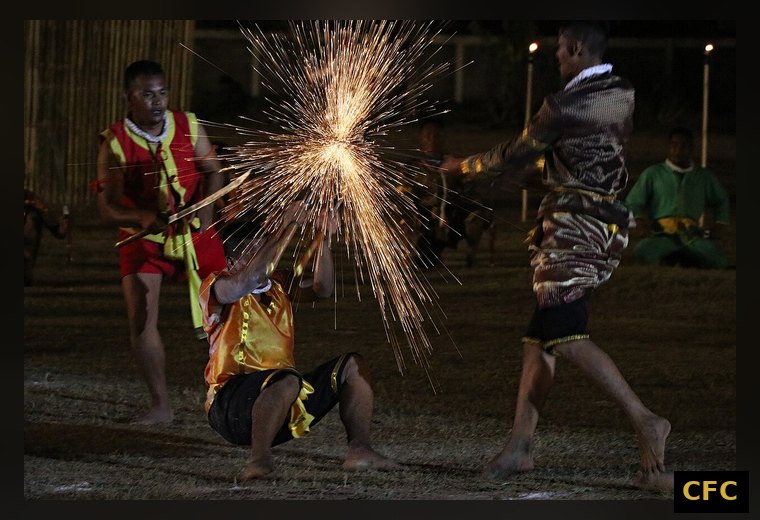
Grew out of Muay ThaiKrabi Krabong
กระบี่กระบอง – “sword and staff”
กระบี่กระบอง · Schwert und Stock
Thai weapon art with sword (krabi), staff (krabong), twin swords and shield. Historically the military counterpart to unarmed muay boran.
Origin: ThailandEra: weapon art of the Siamese army, sources from the 16th/17th centuryMartial art
Philippines – FMA
How they connect
Pekiti-Tirsia Kali
Filipino blade system focused on knife, double stick and aggressive angle work. Also taught in military contexts.
Origin: PhilippinesEra: family system since 1897Founder: the Tortal family (from 1897), today led by Leo T. Gaje Jr.Martial art
Not a style of its own – part of FMA – Filipino Martial ArtsKalis / Kris
Wellenklinge Südostasiens
The flame-shaped blade of the Moro and the Malay world: at once a war weapon, a status symbol and a ritual heirloom. The waved edge widens the wound; in silat and the southern Philippine FMA lineages the kris is the core blade.
Origin: Philippines, Indonesia, MalaysiaEra: documented from the 14th/15th centuryWeapon
Not a style of its own – part of FMA – Filipino Martial Arts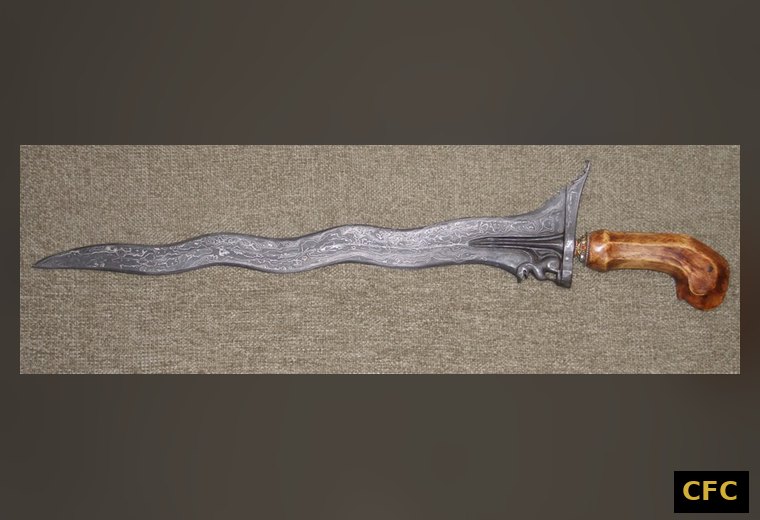
Barong & Bolo
philippinische Arbeits- und Kriegsklingen
Barong: the heavy leaf-shaped blade of the Tausug. Bolo: the ubiquitous field knife that cut everything from sugar cane to uprisings. Both were feared in the Philippine–American War and still shape the cutting angles of FMA.
Origin: PhilippinesEra: traditional, documented in warfare around 1900Weapon
Not a style of its own – part of FMA – Filipino Martial ArtsBalisong
Butterflymesser · Batangas
A folding knife with a split handle, carried in Batangas as an everyday and defensive knife. Relevant to FMA because opening it in the hand is itself part of the movement training.
Origin: Philippines (Batangas)Era: documented from the 19th/20th centuryWeapon
Not a style of its own – part of FMA – Filipino Martial Arts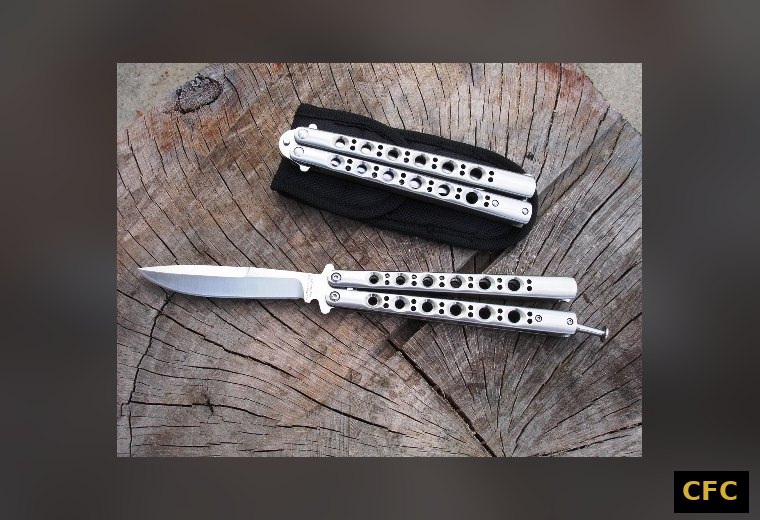
India
How they connect
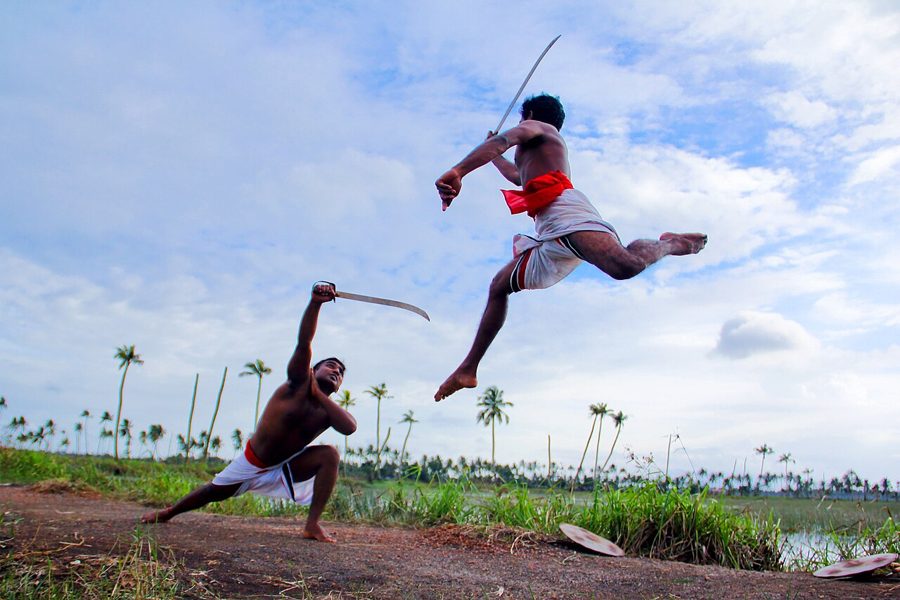
Kalaripayattu
കളരിപ്പയറ്റ് – “practice of the training ground (kalari)”
One of India's oldest documented martial arts: wide footwork, jumps, stick and blade weapons up to the flexible urumi sword, combined with traditional medicine and massage.
Origin: India (Kerala)Era: roots from the 11th/12th centuryFounder: no historical founder; tradition names the sages Parashurama (north) and Agastya (south)Martial art
Urumi
ഉറുമി – “flexible sword”
ഉറുമി · biegsames Peitschenschwert
One or several flexible steel blades on a hilt, worn around the waist. The most dangerous weapon of kalaripayattu – above all for the untrained wielder, which is why it is taught only at the end of the curriculum.
Origin: India (Kerala) – kalaripayattuEra: traditional, referenced from the 16th centuryWeapon
Not a style of its own – part of Kalaripayattu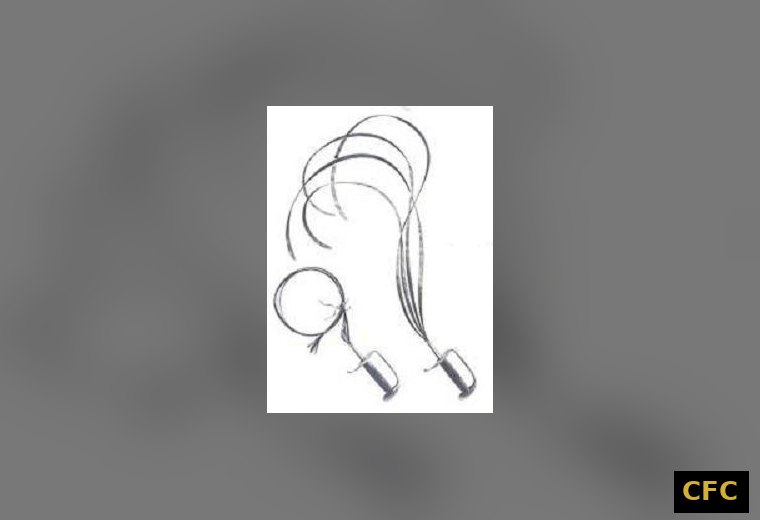
Silambam
tamilischer Stockkampf
One of the oldest documented stick-fighting arts: a long bamboo staff, circular movement, work at range. Historically the training of warriors and caravan guards in southern India.
Origin: India (Tamil Nadu)Era: mentioned in Sangam texts from ca. the 2nd centuryMartial art
Gatka
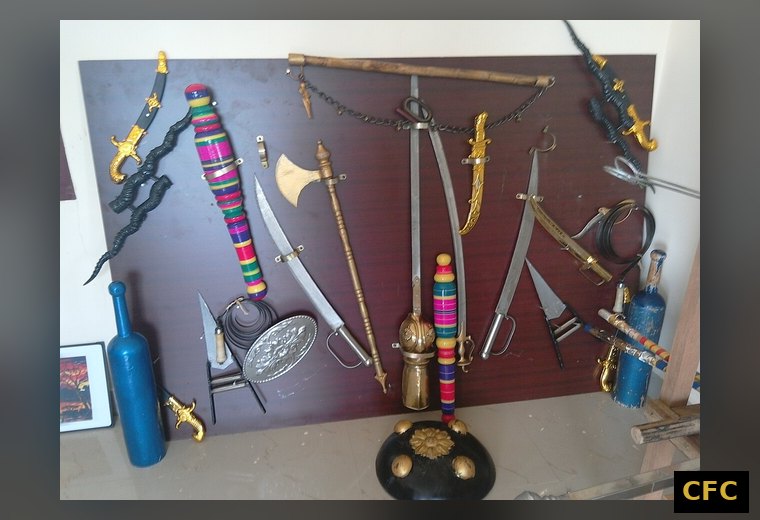
Shastar Vidiya · Sikh-Waffenkunst
The weapon art of the Sikh warriors with curved sword (kirpan), stick, shield and the throwing ring chakram. It grew out of the military defense of the Sikh community and today is also a religious and festive tradition.
Origin: India (Punjab)Era: 17th/18th centuryFounder: rooted in the Sikh warrior tradition, shaped under Guru Hargobind (1595–1644)Martial art
Kali, Shiva & die indische Kampftradition
Begriff · religiöser Hintergrund
Not a style but the religious frame: Shiva is seen as the origin of dance and destruction, the goddess Kali as the force that overcomes time and fear. Kalaripayattu begins with a bow to master, ground and deity. Important distinction: the Philippine “kali” has nothing to do with the goddess – the name comes from the Southeast Asian language area.
Origin: IndiaEra: traditionalTerm / person
Not a style of its own – part of KalaripayattuMalla-Yuddha
मल्लयुद्ध – “wrestlers' combat”
मल्लयुद्ध · Kushti / Pehlwani
Classical Indian wrestling with throws, clinches and ground control, mentioned in the Mahābhārata and Rāmāyaṇa. It lives on today in the clay-pit wrestling of kushti/pehlwani.
Origin: Indian subcontinentEra: described in epics from around 400 BCCombat sport
Mardani Khel
मर्दानी खेळ – “manly game” – war art of the Marathas
मर्दानी खेळ
Weapon art of the Marathas with the curved talwar, shield, spear and the flexible patta sword. Shaped by fast movement in rough hill country.
Origin: India (Maharashtra)Era: Maratha era, 17th centuryMartial art
Thang-Ta (Huyen Langlon)
ꯊꯥꯡ-ꯇꯥ – “sword and spear”
ꯊꯥꯡ-ꯇꯥ · „Schwert und Speer“
War art from Manipur with sword (thang) and spear (ta), complemented by the empty-hand area sarit sarak. Revived in the 20th century after British colonial rule.
Origin: India (Manipur)Era: traditional, documented from the 17th centuryMartial art
Musti-Yuddha
मुष्टियुद्ध – “fist combat”
मुष्टियुद्ध · Muki Boxing
Indian fist fighting with punches, kicks, knees and elbows, historically fought without hand protection. Closely tied to the wrestling yards (akhara).
Origin: India (Varanasi among others)Era: ancient roots, contests into the 20th centuryCombat sport
Varma Kalai / Marma Adi
வர்ம கலை – “art of the pressure points”
வர்ம கலை
The teaching of pressure points (varmam/marma) within kalaripayattu and southern Indian systems – historically always two-sided: attacking a point and treating the same point in traditional medicine.
Origin: India (Tamil Nadu, Kerala)Era: traditional, textual sources from the medieval periodTerm / person
Not a style of its own – part of Kalaripayattu
Europe – historical & modern
How they connect
Bare-Knuckle Fights
Bare-Knuckle Boxing · Prizefighting
Fist fighting without boxing gloves, historically with long rounds and wrestling elements. Modern leagues use rule sets, hand wraps and weight classes.
Origin: England, today internationalEra: 18th/19th century, modern competition scene since around 2018Combat sport
Grew out of Boxen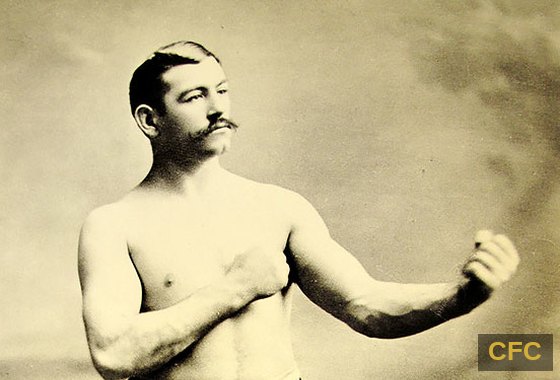
Kickboxen
Sporting combination of boxing punches and kicks across several rule sets (semi-contact through K-1). Very common in Europe.
Origin: Japan / USA / EuropeEra: 1960s/70sCombat sport
Grew out of Karate-DōBoxen
Fist fighting focused on footwork, distance and guard. Provides the striking basics used in many modern systems.
Origin: England / antiquityEra: ancient roots, modern rules from 1867Founder: no founder – rule sets by Jack Broughton (1743) and the Queensberry Rules (1867)Combat sport
Grew out of Pankration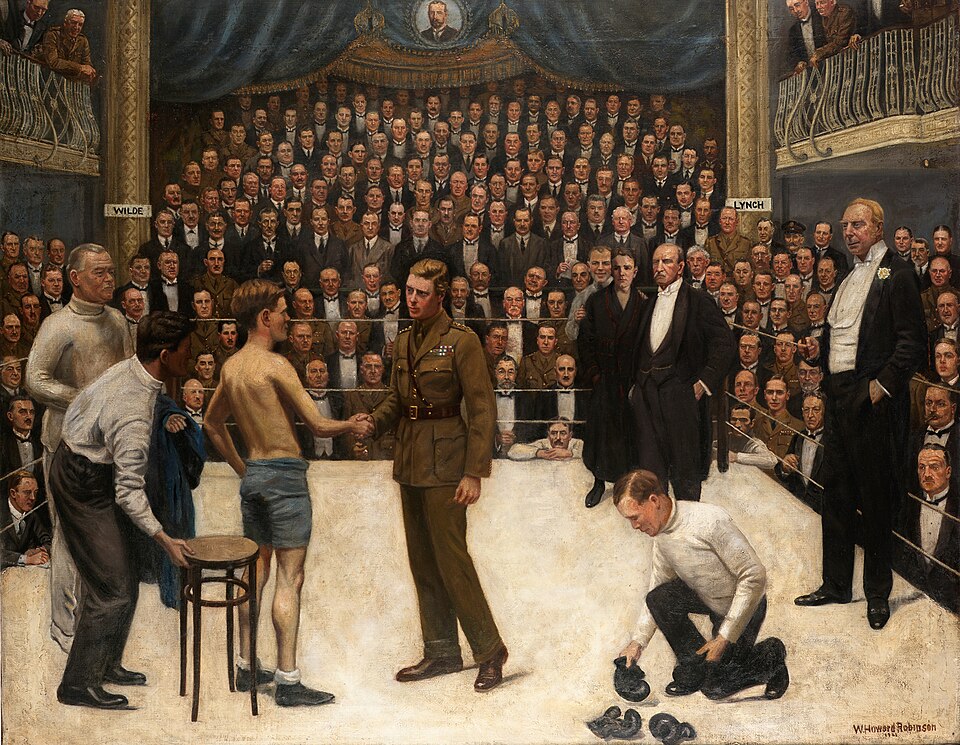
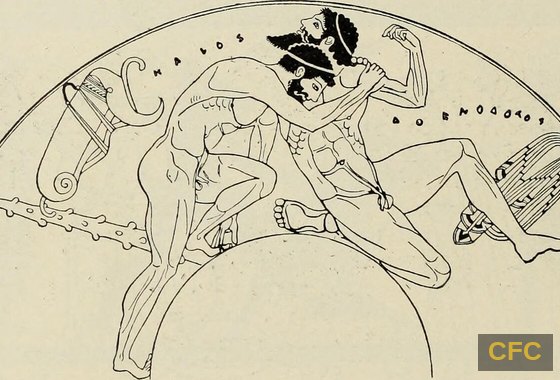
Ringen / Wrestling
The oldest combat sport: throws, control and ground work without strikes. Foundation for Sambo, Judo variants and MMA takedowns.
Origin: worldwide, including EuropeEra: ancient roots, Olympic since 1896Combat sport
Savate
Savate / Boxe française – “old shoe”
Boxe française
French kickfighting performed in shoes, combined with boxing technique. Elegant footwork under clear sporting rules.
Origin: FranceEra: 19th centuryFounder: Charles Lecour (1808–1894) combined savate with English boxingCombat sport
Grew out of Boxen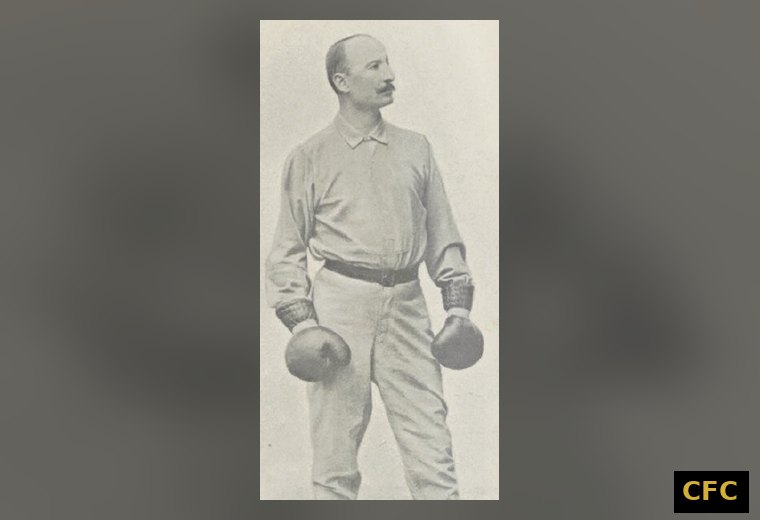
Kampfringen (europäisch)
Historical European wrestling with locks, throws and grips from the old fight books. Part of many HEMA curricula.
Origin: Central EuropeEra: fight books from the 14th/15th centuryMartial art
Grew out of HEMA – Historische Europäische KampfkünsteSportfechten
Florett · Degen · Säbel
Modern fencing sport with three weapons and electronic scoring. Focused on timing, distance and line work.
Origin: EuropeEra: from historical fencing, Olympic since 1896Combat sport
Grew out of HEMA – Historische Europäische KampfkünsteLa Verdadera Destreza
La Verdadera Destreza – “the true skill”
Spanische Fechtkunst · Rapier
Spanish rapier fencing built on geometry, circular movement and exact distance work rather than strength. One of the most influential European weapon schools of the early modern era.
Origin: SpainEra: from 1569 (Jerónimo Sánchez de Carranza)Founder: Jerónimo Sánchez de Carranza (1582) and Luis Pacheco de NarváezMartial art
Grew out of HEMA – Historische Europäische Kampfkünste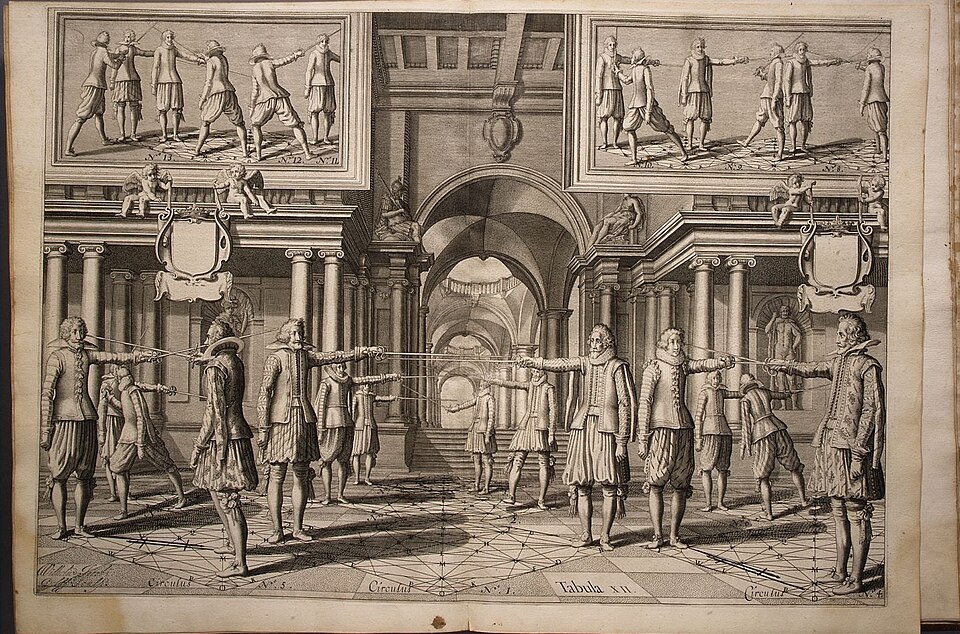
Navaja / Baratero
Navaja – “folding knife” (Spanish)
Andalusischer Messerkampf · Manual del Baratero
Andalusian knife tradition around the folding navaja, documented in the 1849 “Manual del Baratero” – one of the oldest surviving European texts devoted solely to the knife. Cloak work, deception and very short distance are typical.
Origin: Spain (Andalusia)Era: 18th/19th century, manual published 1849Self-defense system
Grew out of La Verdadera Destreza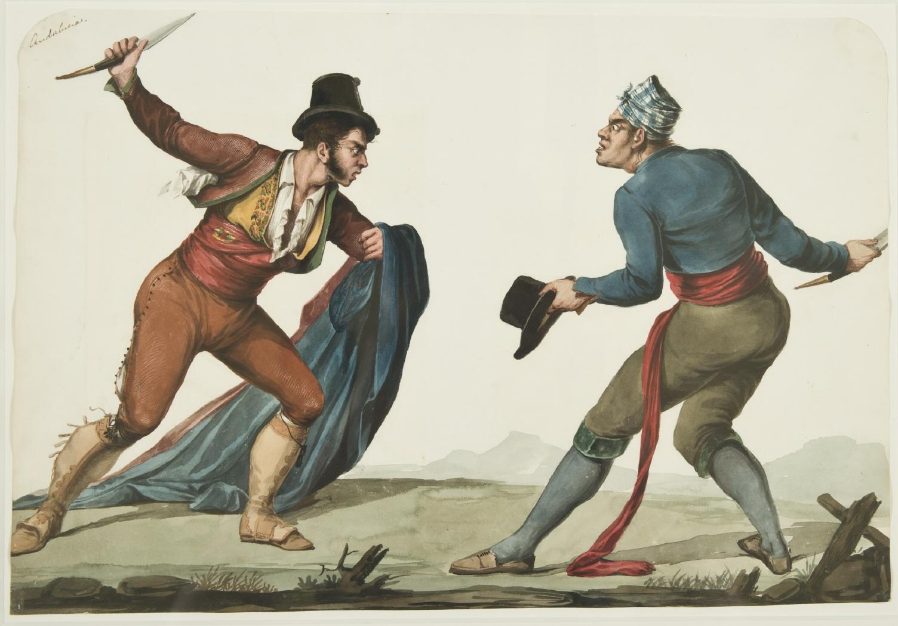
Scherma di Coltello Siciliana
Paranza corta · Scherma di bastone
Southern Italian knife tradition passed on within families rather than taught in schools. Short blade, tight distance, heavy use of the free hand; related to the stick tradition “scherma di bastone”.
Origin: Italy (Sicily, Calabria, Apulia)Era: documented from the 19th centurySelf-defense system
Jogo do Pau
Jogo do Pau – “game of the stick” (Portuguese)
Portuguese staff fighting with the long walking stave, originally developed for defense against several opponents. Wide arcs, footwork and control of space define the system.
Origin: Portugal (Minho, Beiras)Era: documented from the 18th/19th centuryMartial art
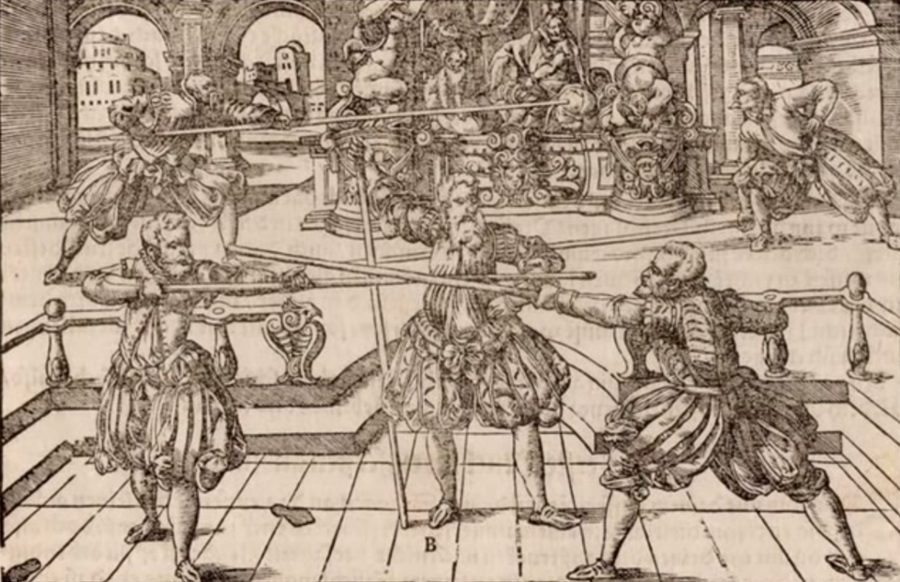
Bartitsu
Baritsu
Early European hybrid of jiu jitsu, boxing, savate and walking-stick fighting for the Victorian street. Considered one of the first documented cross-training concepts.
Origin: England (London)Era: 1898/99 (Edward Barton-Wright)Founder: Edward William Barton-Wright (1860–1951), London 1898/99Self-defense system
Grew out of Jiu Jitsu (Ju-Jutsu)Quarterstaff & Bare-Knuckle-Pugilismus
English quarterstaff · Broughton Rules
English folk fighting traditions: the quarterstaff of the rural population and bare-knuckle prizefighting, which received its first rule set in 1743. Modern boxing grew out of this line.
Origin: EnglandEra: staff from the 16th century, boxing rules from 1743Martial art
Grew out of BoxenCanne de Combat
Canne de combat – “fighting cane” (French)
French stick fighting with the light walking cane, closely linked to savate. Fast, wide strikes from the wrist and pronounced footwork.
Origin: FranceEra: 19th century, sportified from the 1970sFounder: codified as a sport by Maurice Sarry (1970s)Combat sport
Gouren
Gouren – “wrestling” (Breton)
Bretonisches Ringen
Celtic wrestling tradition of Brittany: fought in a linen shirt, scored by a clean throw onto both shoulder blades. An oath of honour precedes the bout.
Origin: France (Brittany)Era: Celtic roots, codified from 1930Combat sport
Glíma
Glíma – “wrestling, game” (Old Norse)
Icelandic national wrestling with a belt grip at hip and thigh: upright posture, constant circling, throws by timing rather than strength. One of Europe's oldest continuously practiced fighting traditions.
Origin: Iceland / ScandinaviaEra: Viking age, modern form from 1900Combat sport
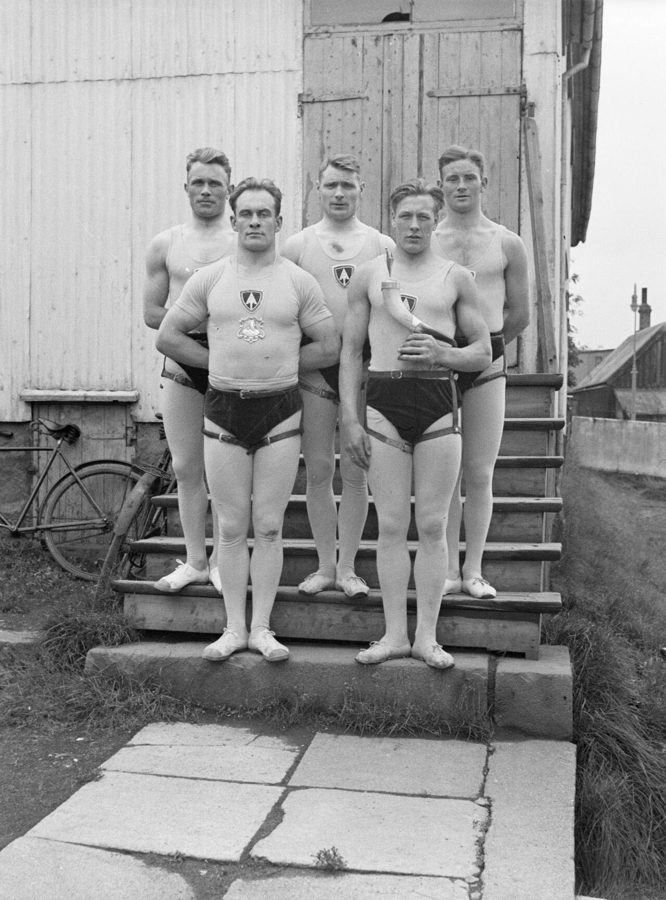
Schwingen
Schweizer Hosenlupf
Alpine wrestling in a sawdust ring, gripping the opponent's drill breeches. Clearly regulated swings and throws, deeply rooted in Alpine rural culture.
Origin: SwitzerlandEra: documented from the 13th centuryCombat sport
Pankration
παγκράτιον (Pankration) – “all powers” – boxing and wrestling combined
παγκράτιον
Ancient all-round combat combining boxing and wrestling: strikes, kicks, throws, locks and chokes were allowed. Regarded as the earliest documented forerunner of today's free-fighting systems.
Origin: GreeceEra: Olympic discipline from 648 BCCombat sport
Grew out of Ringen / Wrestling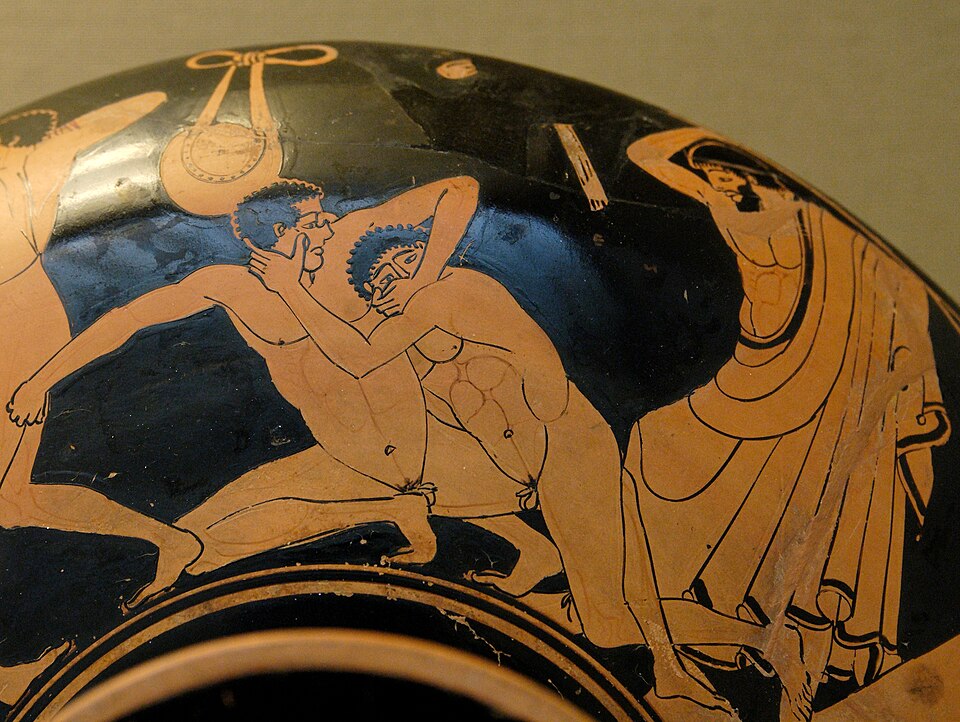
Griechisch-römisches Ringen
Greco-Roman – wrestling above the waist only
Greco-Roman Wrestling
Wrestling style in which attacks are only allowed above the waist – no leg attacks. Throwing and lifting out of the upper-body clinch is central.
Origin: France/Europe (the name references antiquity)Era: modern form from the 19th century, Olympic since 1896Combat sport
Grew out of Ringen / Wrestling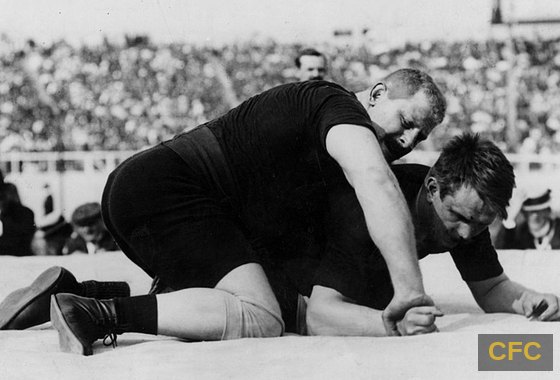
Paranza Corta
paranza corta (ital.) – “short guard”
Scherma di coltello · süditalienischer Messerkampf
Italy’s best-known traditional knife fighting method: “short guard” – blade held close, body covered, small steps, cuts instead of wide swings. It grew out of the duelling culture of the Mezzogiorno and was passed on in closed, discreet schools.
Origin: Italy (Naples, Apulia, Calabria)Era: 19th century, transmitted to this daySelf-defense system
Grew out of Scherma di Coltello SicilianaBastone Genovese
Stock, Messer und Raufkunst aus Genua
A northern Italian folk tradition with walking stick, knife (coltello) and tripping (gambetto). Still taught in Genoa as a living lineage and documented in manuals.
Origin: Italy (Genoa, Liguria)Era: 19th centurySelf-defense system
Liccasapuni
liccasapuni (sizilianisch) – literally “soap licker” – nickname of the duelling knife
Begriff · sizilianisches Duellmesser
Not a style but the blade itself: the Sicilian duelling knife that gave its name to the formal duel of honour – fought with fixed rules, witnesses and limited cutting targets.
Origin: Italy (Sicily)Era: 19th centuryTerm / person
Not a style of its own – part of Scherma di Coltello SicilianaRapier
Stoßdegen des 16./17. Jahrhunderts
The civilian duelling weapon of the early modern period: a long, slim thrusting blade, often paired with dagger or cloak in the left hand. The basis of Spanish destreza and Italian fencing – and the ancestor of modern sport fencing.
Origin: Spain, ItalyEra: approx. 1550–1700Weapon
Not a style of its own – part of La Verdadera Destreza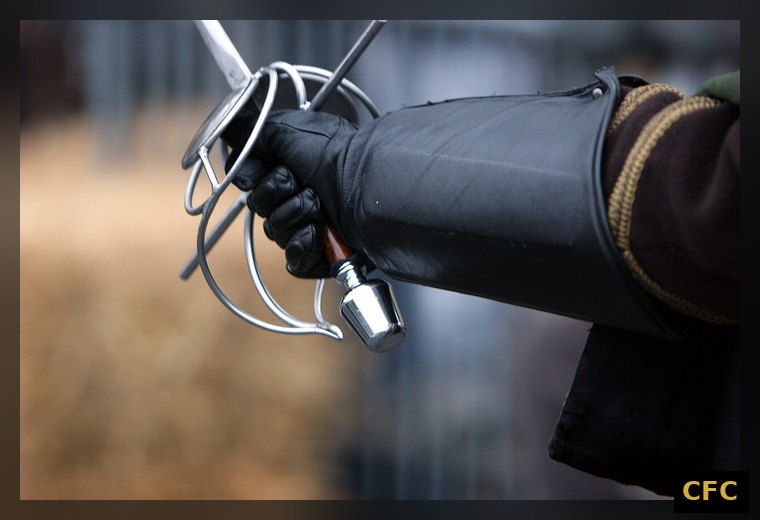
Messer & Dusack
einschneidige europäische Kurzwaffen
The “Grosses Messer” was the weapon of townspeople not permitted to carry a sword – single-edged, with a nail on the hilt. The dusack served as a practice weapon. Both are documented at length in the fight books of Talhoffer and Meyer.
Origin: Central EuropeEra: 15th/16th centuryWeapon
Not a style of its own – part of HEMA – Historische Europäische Kampfkünste
The Americas
How they connect
Brazilian Jiu-Jitsu (BJJ)
Ground-fighting system built on positional control, joint locks and chokes. Widespread internationally as a sport and as part of MMA training.
Origin: Brazil (from Japan)Era: from the 1920s (Gracie family)Founder: Carlos and Hélio Gracie, building on the judoka Mitsuyo Maeda (1878–1941)Combat sport
Grew out of JudoLuta Livre
Brazilian no-gi grappling that developed as a counterpart to BJJ. Fast transitions and a strong emphasis on leg locks.
Origin: BrazilEra: from the 1920sFounder: Euclydes “Tatu” Hatem (1909–1984)Combat sport
Grew out of Ringen / WrestlingVale Tudo
Early Brazilian open-rules fighting format, literally “anything goes”. A direct predecessor of modern MMA.
Origin: BrazilEra: from the 1920s/30sCombat sport
Grew out of Brazilian Jiu-Jitsu (BJJ)MMA – Mixed Martial Arts
Competitive sport combining striking, kicking, throwing and grappling under one rule set. Not a traditional style, but a sporting format.
Origin: USA / Brazil / JapanEra: modern format from 1993Founder: no founder – a competition format, popular worldwide from 1993 (UFC)Combat sport
Grew out of Vale TudoCapoeira
Capoeira – from Tupi/Portuguese – “cleared bushland”
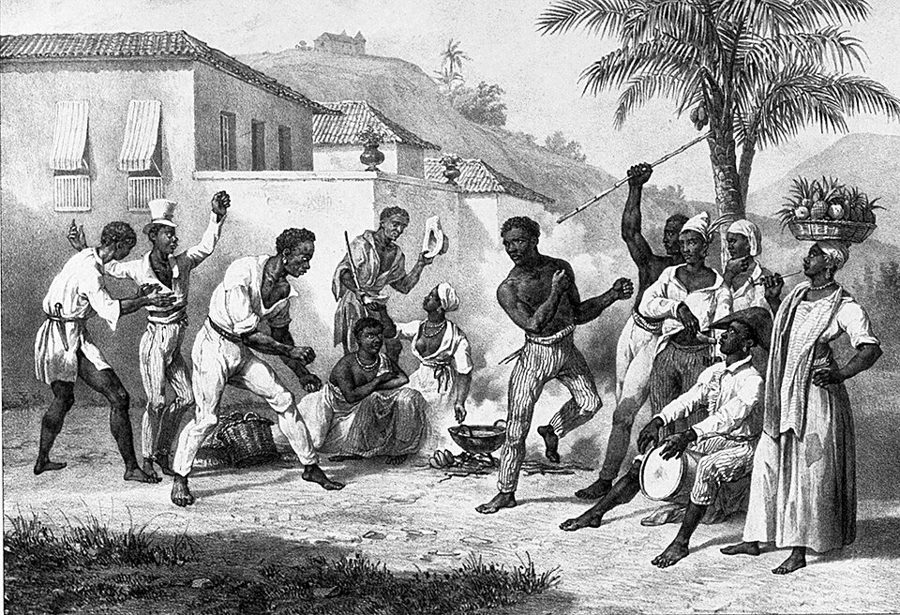
A blend of fighting, acrobatics, music and dance that emerged under slavery. Played in a circle (roda) to berimbau rhythms.
Origin: Brazil (African roots)Era: 16th–19th centuryMartial art
Jeet Kune Do
Concept formulated by Bruce Lee drawing on Wing Chun, fencing and boxing. Not a fixed style but a principle of reduction.
Origin: USA (Chinese roots)Era: 1967 (Bruce Lee)Founder: Bruce Lee (1940–1973), named in 1967Self-defense system
Grew out of Wing Chun Kung FuOkichitaw / Kriegskunst der Plains
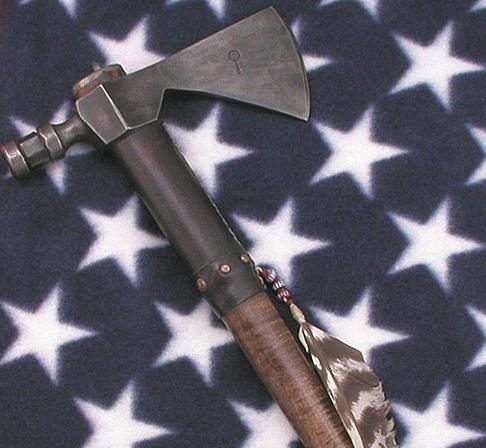
Tomahawk · Gunstock War Club · Lanze
Fighting art of the Plains warriors with tomahawk, war club, lance and knife, complemented by wrestling and strikes from the same movement logic. Codified in Canada as Okichitaw.
Origin: North America (Plains Cree, Canada)Era: historic warrior tradition, systematised in 1997Founder: George J. Lépine (b. 1962), Canada 1997Martial art
Kajukenbo
Karate · Judo · Kenpo · Boxen
The first deliberately mixed American self-defense system: assembled from karate, judo/jiu-jitsu, kenpo and boxing, developed for hard street situations.
Origin: USA (Hawaii, Palama Settlement)Era: founded in 1947Founder: Adriano Emperado and the “Black Belt Society”, Hawaii 1947Self-defense system
Grew out of Kenpo KarateCatch Wrestling
Catch-as-catch-can
Wrestling with submissions: throws, ground control and painful locks. Brought to the USA by carnival wrestlers and still the basis of many MMA holds.
Origin: England (Lancashire) / USAEra: 19th centuryCombat sport
Grew out of Ringen / WrestlingFolkstyle Wrestling
Collegiate Wrestling · US-Schulringen
Wrestling as practiced in US schools and universities: control rather than throw points. It still shapes the takedown and cage game of many American MMA fighters.
Origin: USAEra: since the early 20th centuryCombat sport
Grew out of Ringen / Wrestling52 Blocks
Jailhouse Rock · US-Straßenboxen
A boxing system handed down in prison and street settings: tight guard, work from behind the shoulder shield, punches from unusual angles in very tight space.
Origin: USA (east coast, New York)Era: 20th centurySelf-defense system
Grew out of Boxen
Africa
How they connect
Nguni-Stockkampf
Donga · Zulu stick fighting
Two-stick system with an attacking and a shielding stick, traditionally used as a rite of passage for young men and at ceremonies. Emphasises range, cover and honourable conduct.
Origin: South Africa (Nguni/Zulu)Era: traditional, still practiced todayMartial art
Dambe
Dambe – “boxing” (Hausa)
West African boxing of the Hausa: one wrapped striking hand (the “spear”), the other leading and covering (the “shield”). Bouts run in short, high-intensity rounds.
Origin: Nigeria / Niger (Hausa)Era: traditional, organized in the 20th centuryCombat sport
Oceania
How they connect
Mau Rākau & Haka
Mau rākau – “to bear a weapon” (te reo Māori)
Taiaha · Mere · Tewhatewha
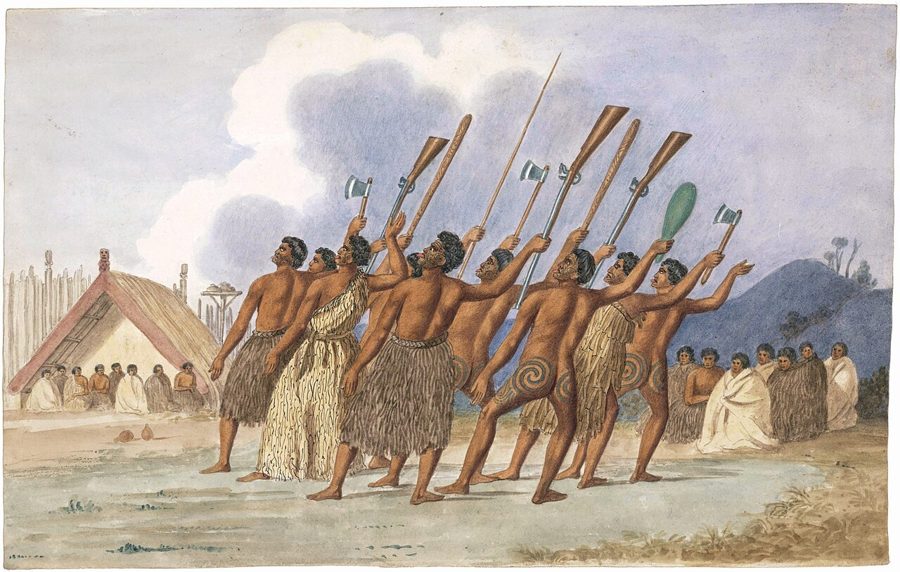
Māori weapon art with the taiaha (staff weapon), mere and tewhatewha – posture, gaze and voice are part of the technique. The haka was originally a war dance used to intimidate and to steel the mind before combat.
Origin: New Zealand (Māori, Aotearoa)Era: pre-colonial tradition, revived from 1983Martial art
Coreeda & Bumerang-Waffen
Aboriginal fighting arts · Woomera · Nulla-Nulla
Wrestling tradition of Aboriginal Australia, tied to dance and ceremony and regulated today as Coreeda. The weapon repertoire included throwing sticks and boomerangs, the woomera spear-thrower and clubs such as the nulla-nulla.
Origin: Australia (Aboriginal cultures)Era: very old tradition, modern form since the 1990sCombat sport
Aboriginal-Waffenkampf
Nulla Nulla · Woomera · Bumerang
Fighting and hunting arts of Australia’s First Nations: club (nulla nulla), hardwood shield, spear with throwing aid (woomera) and the fighting boomerang – practiced in regulated duels.
Origin: Australia (First Nations)Era: traditional, thousands of years oldMartial art
Tasmanischer Speerkampf
palawa · Tasmanien
The fighting practice of Tasmania’s Aboriginal people: long fire-hardened wooden spears and throwing clubs used on the move. Documented only in early accounts and drawings.
Origin: Tasmania (palawa people)Era: traditional, pre-colonialMartial art
Taiaha
taiaha (te reo Māori) – long staff with a blade end
Māori-Langwaffe · gehört zum Mau rākau
The best-known Māori weapon: a wooden staff about body height with a blade end and a carved tongue head. It is used with thrusts, strikes and body rotation from a low stance.
Origin: New Zealand (Aotearoa)Era: handed down from pre-colonial timesMartial art
Not a style of its own – part of Mau Rākau & HakaPatu / Mere
patu / mere pounamu – “to strike” / jade club
Māori-Kurzkeule
A flat short club of stone, bone or jade (mere pounamu). A weapon of the closest range: thrust rather than swung, carried by leaders as a mark of rank.
Origin: New Zealand (Aotearoa)Era: handed down from pre-colonial timesMartial art
Not a style of its own – part of Mau Rākau & HakaHaka
haka (te reo Māori) – “dance with chant”
Begriff · ritueller Kriegstanz der Māori
Not a style but a ritual: a rhythmically stamped dance with chant, gaze and body tension. Before combat it served to intimidate, to test the other side’s intent and to steel oneself.
Origin: New Zealand (Aotearoa)Era: traditionalTerm / person
Mata’a-Kriegertradition
mata’a (Rapa Nui) – obsidian point
Rapa Nui · Osterinsel
The fighting tradition of Easter Island: obsidian points (mata’a) on spears and staffs, plus wooden clubs (ua, paoa). Recent research reads the mata’a more as tool and status weapon than as a pure killing blade.
Origin: Rapa Nui (Easter Island)Era: approx. 17th/18th centuryMartial art
Haka Pei
Rapa Nui · Mutprobe beim Tapati-Fest
A traditional test of courage for young men: sliding down a steep volcanic slope on bound banana trunks. Not a duel, but part of warrior training – nerve under real risk.
Origin: Rapa Nui (Easter Island)Era: traditional, today a festival contestCombat sport
Middle East & Russia
Krav Maga
קרב מגע (Krav Maga) – “contact combat”
Krav Maga is a well-known self-defence system developed by Imi Lichtenfeld. His early experience in boxing, wrestling and resisting violent attacks in Bratislava shaped its development; from the 1940s onwards, the system evolved in what is now Israel and was later adapted for civilian use. Its core principles include simple, situation-specific movements, early recognition of danger, ending a threat as quickly as possible and escaping to safety. Today, Krav Maga is practised internationally within different civilian, police and military organisations; curricula and training methods vary between organisations.
Origin: IsraelEra: from the 1940sFounder: Imi Lichtenfeld (1910–1998) for the Israeli defence forcesSelf-defense system
Systema
Система – “the system”
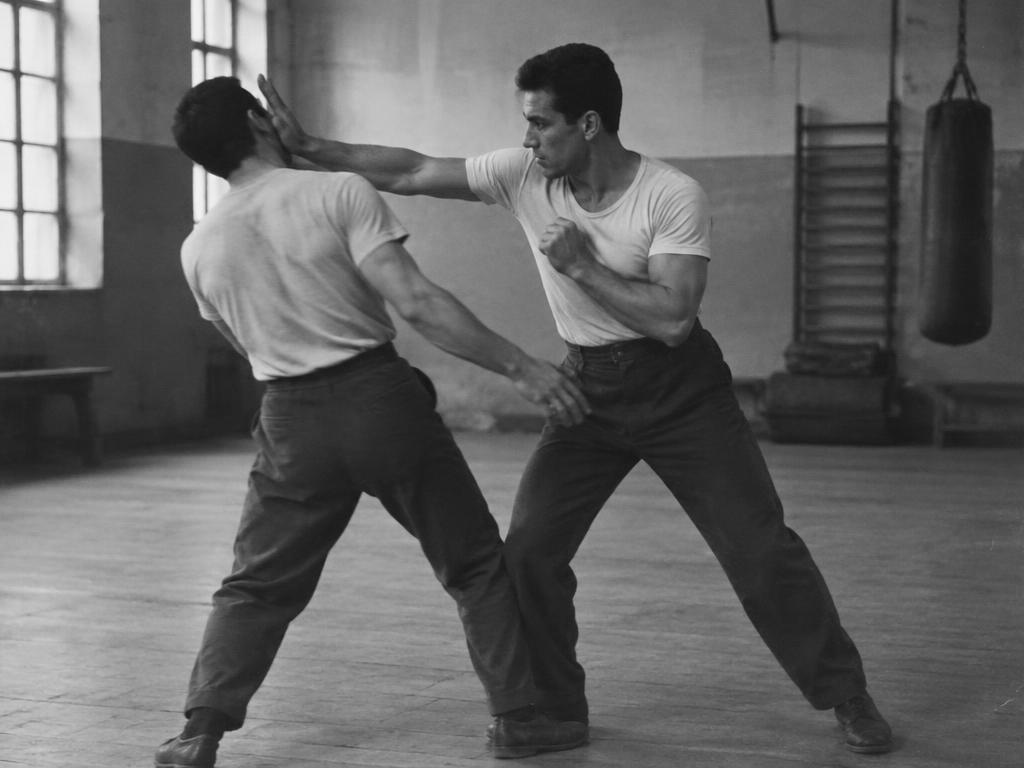
Russian close-combat system built on breathing, relaxation and movement rather than fixed technique catalogues. Very soft in execution.
Origin: RussiaEra: modern form from the 1990sFounder: spread in modern times by Mikhail Ryabko and Vladimir VasilievSelf-defense system
Sambo
САМБО – “self-defense without a weapon”
Wrestling system derived from Judo and regional grappling styles; Combat Sambo adds strikes. Strong in throws and leg locks.
Origin: Soviet Union / RussiaEra: 1920s/30sFounder: Viktor Spiridonov, Vasili Oshchepkov and Anatoly Kharlampiev (1920s/30s)Combat sport
Grew out of Judo
Terms & people
How they connect
Budō
武道 – “way of martial arts”
武道 – „Weg des Kampfes“
Umbrella term for the Japanese martial ways, where personal development matters alongside technique – in contrast to purely combative bujutsu.
Origin: JapanEra: modern term, rooted in bujutsuTerm / person
Bushidō
武士道 – “way of the warrior”
武士道 – „Weg des Kriegers“
The samurai code of values: integrity, courage, respect, self-control and loyalty. It still shapes conduct in many training halls today.
Origin: JapanEra: codified mainly during the Edo periodTerm / person
Wu Dao
武道 (Wǔdào) – “way of martial arts”
武道 · Wǔdào – „Weg der Kampfkunst“
The Chinese counterpart to budō: martial art as a path of practice with an inner attitude, not merely a collection of techniques.
Origin: ChinaEra: classical termTerm / person
Ng Mui
五枚 – name of the legendary nun
五枚 · Ng Mui Si Tai
Legendary nun regarded as the founder of Wing Chun, said to have passed her knowledge to its namesake Yim Wing Chun. Not historically documented, yet formative for the system's self-image.
Origin: China (legend, southern/south-western China)Era: traditionally placed in the 17th/18th centuryTerm / person
Sandalen im Training
Zōri · Waraji · Trainingsschuhwerk
Traditionally sandals (zōri, waraji) were worn up to the training area and taken off before stepping on. At CFC in Villach we train barefoot or in clean non-slip socks.
Origin: East AsiaEra: traditionalTerm / person
Eskrima, Arnis, Kali – die Wortbedeutung
Esgrima · Arnés · Kali – “fencing” · “armour” · old collective term
Begriff · gehört zu den FMA
Not a style of its own but three names for the same family: eskrima comes from Spanish esgrima (“fencing”), arnis from arnés (“armour”, via the stage combat arnis de mano), kali is the older collective term used mainly in the south.
Origin: PhilippinesEra: terms in use since the colonial eraTerm / person
Not a style of its own – part of FMA – Filipino Martial ArtsPuño
Puño – “fist”, also the butt of the stick
Begriff · gehört zu den FMA
Not a style but a term: “fist”, and also the short butt of the stick below the gripping hand. It is used at close range to strike, hook and control – in eskrima effectively a third hand.
Origin: Philippines (Spanish loan word)Era: historically grownTerm / person
Not a style of its own – part of FMA – Filipino Martial ArtsKamot
Kamot – “hand” (Cebuano)
Begriff · gehört zum Pangamut (FMA)
Not a style but the word for “hand”. Kamot-kamot refers to empty-hand work in which stick and knife movements are transferred to the bare hand.
Origin: Philippines (Cebuano)Era: historically grownTerm / person
Not a style of its own – part of PangamutWu Wei
無為 (Wúwéi) – “action through non-action”
無為 · Prinzip · daoistische Grundhaltung
Not a style but a principle: “action through non-action”. It does not mean passivity but effortless, unforced action in tune with the situation – never forcing, never running against the opponent’s force. In the internal systems (tai chi, yiquan) and in Wing Chun it shows as yielding, sticking and acting at the right moment instead of strength against strength.
Origin: China (Daoism, Laozi’s “Daodejing”)Era: from approx. the 4th century BCTerm / person
Not a style of its own – part of Tai Chi ChuanZhan Zhuang
站樁 – “standing like a post”
站樁 · Begriff · Standübung der inneren Systeme
Not a style but the “standing like a post” exercise: motionless postures training structure, breathing and body awareness. A core practice in yiquan, taikiken and many tai chi lines.
Origin: ChinaEra: traditionally transmittedTerm / person
Not a style of its own – part of YiquanIp Man (Yip Man)
葉問 – name of the Wing Chun master
葉問 · Person · Wing-Chun-Meister in Hongkong
Not a style but the person who taught Wing Chun publicly in Hong Kong from 1949 and thereby made it known worldwide. Nearly every lineage today traces back to his students.
Origin: China / Hong KongEra: 1893–1972Term / person
Not a style of its own – part of Wing Chun Kung FuBruce Lee
李小龍 – “Lee, little dragon”
李小龍 · Person · Begründer des Jeet Kune Do
Not a style but the person: a Wing Chun student in Hong Kong, later the developer of Jeet Kune Do and the trigger of the worldwide martial arts wave of the 1970s.
Origin: Hong Kong / USAEra: 1940–1973Term / person
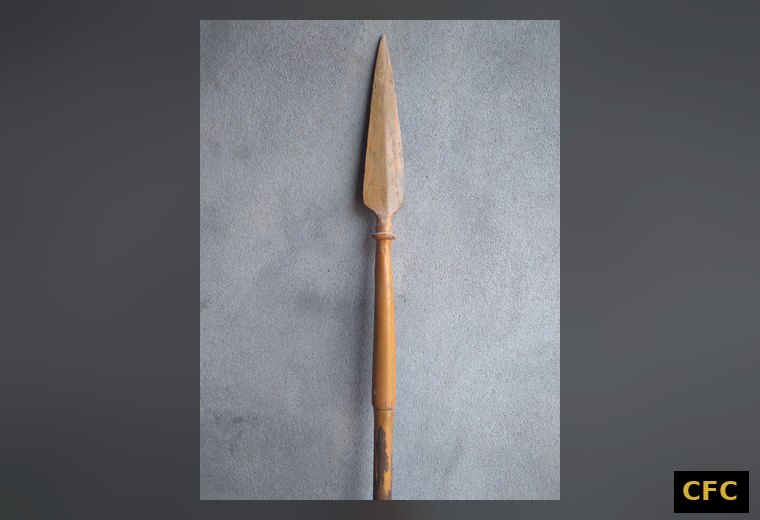
Not a style of its own – part of Jeet Kune DoSpeer & Lanze
die meistgenutzte Waffe der Geschichte
No weapon decided more battles: the Greek phalanx, the Roman pilum, the Japanese yari, the Chinese qiang, the spears of First Nations and Tasmania. Reach, cheap production and fast training made it every army’s standard weapon long before the sword became a symbol.
Origin: worldwideEra: Stone Age to the 19th centuryWeapon
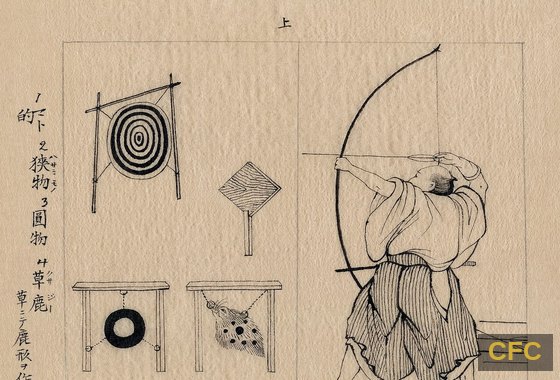
Pfeil und Bogen
Langbogen · Reflexbogen · Yumi
The decisive ranged weapon of the pre-modern world: the English longbow at Crécy and Agincourt, the Mongol recurve bow from horseback, the Japanese yumi in kyūdō. A bow could kill an armoured knight at long range – which is why archery practice was compulsory by law in England.
Origin: worldwideEra: Neolithic to the modern eraWeapon
Guoshu / Wushu
國術 / 武術 – “national art” / “war art”
國術 „Nationalkunst“ · 武術 „Kriegskunst“
Not a style but two umbrella terms: wǔshù literally means “war art” and is the neutral term for all Chinese systems. Guóshù (“national art”) was the name of the 1928 state central institute meant to organize martial arts as military and civic training. After 1949 wushu on the mainland became increasingly a sport and performance discipline, while in Taiwan guoshu denotes the combat-oriented line.
Origin: ChinaEra: guoshu from 1928, wushu from 1949Term / person
Not a style of its own – part of Kung Fu (Gong Fu, 功夫) allgemein
Missing a system?
The lexicon is extended continuously. Tell us which system or term we should add – we research it and add a short entry.